


Most regions with the exceptions of Sudbury, Thunder bay and Timiskaming are above their 10-year averages for GDD. Many areas have seen strong winds over the past week leading to dust clouds in areas with drier fields.

Crop Updates
Cutworms – Insect forecasts and trapping programs are indicating that there has been increased potential for black cutworm moths moving into the Great Lakes region. Moths are attracted to green cover for egg laying. This includes winter annual plants like chickweed or overwintering cover crops. In the coming weeks when scouting vegetable crops, look for signs of above ground feeding and cut stems of seedlings. The larvae are often found in the top 2.5 cm of the soil at the base of the plant.
Asparagus – As the temperatures continue to improve, scout for asparagus beetle adults and egg masses in both the production fields and younger fields that have recently been released. Damage from larval feeding is most impactful in these immature plantings.
Brassica Crops – The threshold for the first generation of cabbage maggot has been reached in Essex and will likely be active by next week in southern parts of the province. Scout for cutworm and flea beetle damage over the next week. Products registered for cutworm management are most effective when they are applied early when the cutworm larvae are small. Damage on the lower leaves of plants with no signs of lepidopteran pests may be the result of early-morning slug feeding.
Cucurbits – As we move into the final week of May and planting begins to ramp up, consider soil and air temperatures before making the decision to plant. For transplants, chilling injury occurs at temperatures below 10°C. While the plants will recover from cool temperatures, the damage can have a lasting impact on the health and vigour of the crop and the early development of flowering tissue. The minimum soil temperature for direct seeded cucurbits is 15°C. Below this level the seeds will be slow to germinate and more prone to early season stand losses.
Garlic – Tipburn is widespread across the province, but newer leaves are generally looking better. Leek moths have been captured in most areas across the province. Leek moths can be monitored to inform insecticide timing by using Delta 1 traps and more information can be found here: March 7, 2025 ONVeg article. Most plants are past the 5th leaf stage, so avoid applying nitrogen to reduce the number of rough bulbs at harvest as well as to encourage longer storage life. Register for the Garlic Growers Association 2026 field day Saturday, June 6th at Great Lakes Family Farms near Grand Bend, Ontario. Equipment from multiple manufacturers will be on display, along with products from fertilizer and pest control product suppliers. The agenda includes presentations on results from past garlic trials, industry, and minor use updates as well as a tour of a new garlic curing and storage facility. Registration starts at 9:00, the agenda starts at 9:30 and goes until 4:30. Lunch will be provided. Great Lakes Family Farms is located at 70748 B Line, Grand Bend, Ontario, and all are welcome to join, rain or shine. Please register for the field day by going to https://www.eventbrite.ca/e/field-day-2026-tickets.
Onions – Direct seeded fields are between the flag and 3 leaf stage. The extreme temperatures have been rough on some fields. Onion maggot flies are active in most regions; be on the lookout for wilted plants. Stake/count 50 or 100 plants now and count later in the seasons to determine how many onions make it to harvest. While scouting, keep on the lookout for cutworms and dig around suspect plants that look like they have been cut with scissors to look for cutworm larvae within the top inch of the soil surface (Figure 1). Control volunteer onions in neighbouring fields, as this can be a source for fungi inoculum like Stemphylium or pests like onion thrips that will be seen in the coming weeks.

Potatoes – Planting is wrapping up on the North shore of Lake Erie. Conditions have been quite dry as of late. Planting continues in Alliston and Shelburne. The season started cool and wet but conditions have improved.
Sweet corn – Scout young plantings to assess the plant stand and early season growth. If there are gaps in the plant stand, or signs of variable growth, look for wireworm or seed corn magot activity in the root zone. Additionally, take a look at the overall health of the root system to rule out root rots or seedling decay. These problems are usually more prevalent in cool, wet springs when emergence and early growth are delayed.
Tomatoes – Due to cooler nighttime temps and recent rain events, there is a slower start to tomato planting this spring. Planting has started and is ongoing for processing tomatoes and fresh market tomatoes are starting with their staggered planting schedules. Be sure to keep an eye out for early season insect pests like black cutworm (Figure 2), wireworm (Figure 3) and Colorado potato beetle (Figure 4) . These insect pests can cause significant damage to transplants, and early detection is key to managing them effectively. Make sure to read all product labels carefully before any pesticide application.


Pest Degree Day Forecasting
| County | Carrot Rust Fly | Onion Maggot | Carrot Weevil | Aster Leafhopper | Tarnished Plant Bug | Cabbage Maggot | Seedcorn Maggot | European Corn Borer |
| THRESHOLD | 329-395, 1399-1711 | 210-700, 1025-1515 | 138-156, 455+ | 128+ | 40+ | 314-398, 847-960, 1446-1604 | 200-350, 600-750, 1000-1150 | See legend below |
| Bruce*** | 238 | 197 | 95 | 48 | 19 | 124 | 197 | 34 |
| Essex* | 521 | 461 | 299 | 207 | 102 | 350 | 461 | 167 |
| Chatham-Kent* | 441 | 383 | 232 | 154 | 78 | 280 | 383 | 125 |
| Norfolk** | 387 | 334 | 208 | 144 | 73 | 244 | 334 | 116 |
| Huron*** | 312 | 262 | 143 | 86 | 34 | 179 | 262 | 65 |
| Wellington** | 288 | 244 | 141 | 89 | 39 | 170 | 244 | 68 |
| Simcoe County*** | 273 | 230 | 132 | 82 | 38 | 161 | 230 | 62 |
| Durham*** | 298 | 252 | 142 | 86 | 36 | 175 | 252 | 67 |
| Peterborough | 286 | 242 | 138 | 88 | 36 | 170 | 242 | 68 |
| Kemptville*** | 310 | 266 | 149 | 95 | 44 | 184 | 266 | 75 |
| Sudbury*** | 136 | 108 | 51 | 28 | 10 | 68 | 108 | 20 |
| Timiskaming*** | 109 | 82 | 38 | 20 | 7 | 49 | 82 | 14 |
| Lambton** | 388 | 332 | 195 | 133 | 58 | 236 | 332 | 106 |
| Thunder Bay | 86 | 62 | 21 | 11 | 5 | 30 | 62 | 8 |
| Middlesex* | 396 | 343 | 207 | 139 | 64 | 248 | 343 | 110 |
| Renfrew | 254 | 214 | 112 | 68 | 30 | 143 | 214 | 54 |
*- Bivoltine region for ECB. First Peak Catch: 300-350 DD, Second Peak Catch 1050-1100 DD
**- Overlap region for ECB. First Peak Catch: 300-350 DD Second Peak Catch 650-700 DD, Third Peak Catch 1050-1100 DD
***-Univoltine region for ECB. Peak Catch 650-700 DD
Use these thresholds as a guide, always confirm insect activity with actual field scouting and trap counts
Select a region below for the latest weather, crop and pest degree day information:
Bruce


Chatham-Kent


Durham


Essex


Huron


Kemptville


Lambton


Middlesex


Norfolk


Peterborough


Renfrew


Simcoe

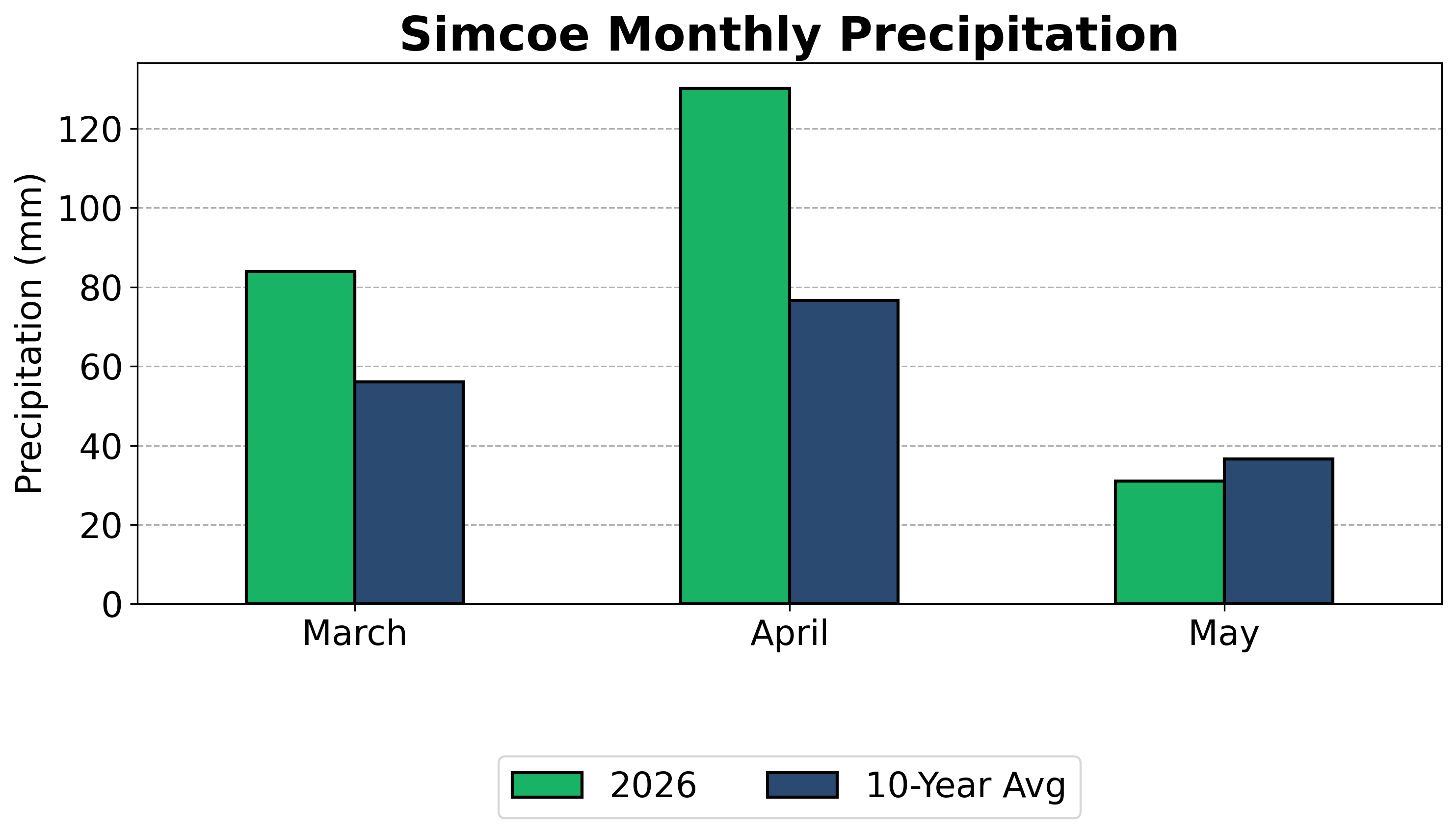
Sudbury


Thunder Bay


Timiskaming


Wellington Centre


Wellington North

