
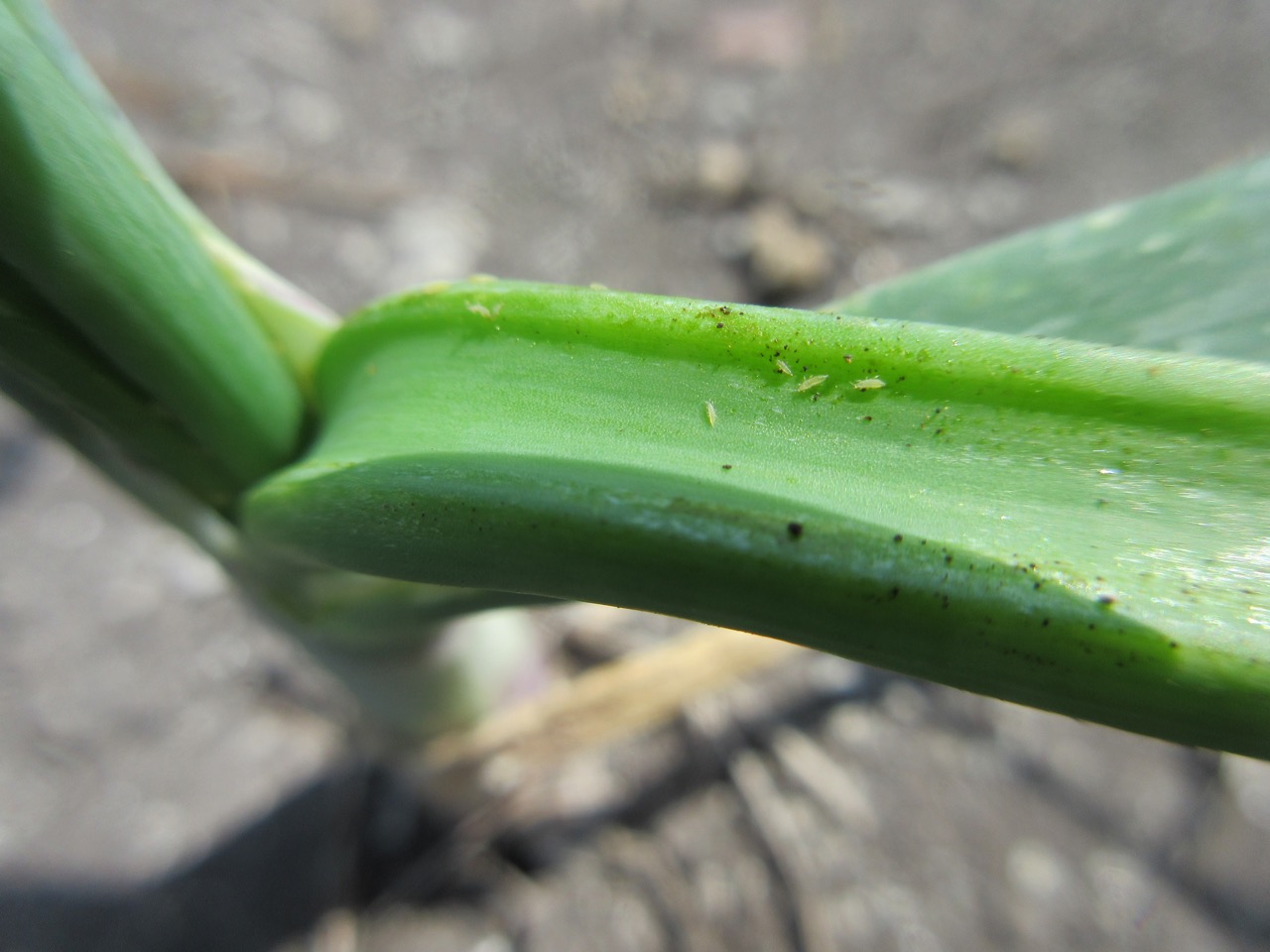
The Pesticides Regulatory Directorate (PRD), formerly known as the Pest Management Regulatory Agency (PMRA), recently announced the approval of a minor use label expansion for Pyganic® insecticide for suppression of onion thrips, and control of beet armyworm, leafhoppers, and climbing cutworms on Crop Group 3-07, Bulb Vegetables. Pyganic® insecticide was already labelled for management of insects on a wide range of crops in Canada. These minor use proposals were submitted by Agriculture and AgriFood Canada’s Pest Management Centre as a result of minor use priorities established by growers and extension personnel across Canada.
The following is provided as an abbreviated, general outline only. Users should be making insect management decisions within a robust integrated insect management program and should consult the complete label before using Pyganic® insecticide.
| Crop(s) | Target | Rate (L product/ha) | Application Information | Pre-Harvest Interval (PHI) (days) |
| CG 3-07 Bulb Vegetables | Suppression of Onion Thrips Control of Beet Armyworm, Leafhoppers, and Climbing Cutworms | 2.32 – 4.65 L | Do not reapply more often than every 3 days. Do not apply more than 10 times per season. Do not apply more than 46.5 L/ha (600 g a.i./ha) per season. For most cutworms, activity is greatest during the late evening and night. Application should be timed as close as possible to insect feeding activity. | 0 – The harvest of all labelled crops is permitted on the day of application. |
Toxic to aquatic organisms. Observe spray buffer zones specified under DIRECTIONS FOR USE. Toxic to bees. Bees may be exposed through direct spray, spray drift, and residues on leaves, pollen and nectar in flowering crops and weeds. Minimize spray drift to reduce harmful effects on bees in habitats close to the application site. DO NOT apply during the crop blooming period where indicated in crop-specific directions. Avoid applications when bees are foraging in the treatment area in ground cover containing blooming weeds. When using managed bees for pollination services, DO NOT apply during the crop blooming period. To further minimize exposure to pollinators, refer to the complete guidance “Protecting Pollinators during Pesticide Spraying – Best Management Practices” on the Health Canada website (www.canada.ca/pollinators). Follow use-specific and crop-specific directions for application timing. Toxic to certain beneficial insects (which may include predatory and parasitic insects, spiders, and mites). Minimize spray drift to reduce harmful effects on beneficial arthropods in habitats next to the application site such as hedgerows and woodland. Care should be taken when using this product in an integrated pest management program where users are relying on the presence of beneficial arthropods. To reduce runoff from treated areas into aquatic habitats, avoid application to areas with a moderate to steep slope, compacted soil, or clay. Avoid application when heavy rain is forecast. Contamination of aquatic areas as a result of runoff may be reduced by including a vegetative filter strip between the treated area and the edge of the water body. Additional guidance can be found on the Runoff Mitigation portion of the Canada.ca website.
Follow all other precautions, restrictions, and directions for use on the Pyganic® insecticide label.
For a copy of the new minor use label contact your local crops specialist, local regional supply outlet, or visit the PMRA label site http://www.hc-sc.gc.ca/cps-spc/pest/registrant-titulaire/tools-outils/label-etiq-eng.php
Note: This article is not intended to be an endorsement or recommendation for this particular product, but rather a notice of registration activity
0 comments on “PYGANIC® Insecticide label expanded via Minor Use Program to help various pests in CG 3-07 Bulb Vegetables in Canada”