


Crop Updates
Brassica Crops – Transplants are starting to take off in fields that were planted in late April or early May. Cabbage maggot has reached its first-generation threshold in Southern regions like Lambton, Chatham-Kent, Middlesex and Norfolk counties. Dig up wilted transplants, even in dry areas, to inspect roots for maggots. Cutworm damage is being found in many different crops and Brassicas are no exception. Products registered for cutworm management are most effective when they are applied early when the cutworm larvae are small. Damage found on the lower leaves of plants with no sign of lepidopteran pests may be the result of early-morning slug feeding, especially around field edges. Stunted plants with red leaves and girdled crowns are likely due to wirestem / Rhizoctonia infection.
Garlic – Be on the lookout for leek moth damage as hardneck cultivars are scaped over the next two weeks. Refer to this article for managing leek moth: https://onvegetables.com/2025/03/07/leekmoth-3/. Snap scapes above the newest leaf and avoid using sickle bar mowers or any knife to remove scapes, as they can easily spread garlic pathogens (including viruses) and often damage leaves during the scape removal process. Past research by John Zandstra has shown that by accidentally removing one leaf when the scape was removed, bulb sizes were reduced by 13% and the yield was reduced by an average of 17.5%. The same trial showed that yield was greatly impacted as the number of leaves cut during mowing increased. If the top two leaves were cut, the yield was reduced by approximately 25%, almost outweighing any potential gains you would expect by removing the scape in the first place.
Register for the Garlic Growers Association 2026 field day this Saturday, June 6th at Great Lakes Family Farms near Grand Bend, Ontario. Equipment from multiple manufacturers will be on display, along with products from fertilizer and pest control product suppliers. The agenda includes presentations on results from past garlic trials, industry, and minor use updates as well as a tour of a new garlic curing and storage facility. Registration starts at 9:00, the agenda starts at 9:30 and goes until 4:30. Lunch will be provided. Great Lakes Family Farms is located at 70748 B Line, Grand Bend, Ontario, and all are welcome to join, rain or shine. Please register for the field day by going to https://www.eventbrite.ca/e/field-day-2026-tickets.

Onion – Direct seeded fields are between the flag and 4th leaf stage. Transplants are doing even better in fields where they have had enough moisture. Onion maggots were active the past couple of weeks. Be on the lookout for wilted plants and dig affected plants and look for maggots. Cutworm damage has been observed but is sporadic. Dig a few inches around plants that appear to have been cut with scissors and try to find the cutworm larvae around plants that have been cut. Insecticides targeting cutworms are more effective if the larvae are small and the damage is found early. A list of products registered to manage cutworms in onions can be found on the Ontario Crop Protection Hub.
Peppers – Pepper planting is ongoing. Growers should aware of European corn borer as the first peak has begun. Though the second peak will be more worrisome as the plants will have fruit at that time. There are many control options available for growers in need. Always make sure to read all product labels before any pest control product application.
Tomatoes – Tomato planting in ongoing but should be wrapping up soon. The recent warmer temperatures have done wonders for the earlier plantings and they are growing out of the chilling injury they suffered a few weeks ago. Growers should still be on the lookout for early season pests like Colorado potato beetle, cutworms and wireworms as the plants are still small enough to be damaged significantly by these insects.
Pest Degree Day Forecasting
| County | Carrot Rust Fly | Onion Maggot | Carrot Weevil | Aster Leafhopper | Tarnished Plant Bug | Cabbage Maggot | Seedcorn Maggot | European Corn Borer |
| THRESHOLD | 329-395, 1399-1711 | 210-700, 1025-1515 | 138-156, 455+ | 128+ | 40+ | 314-398, 847-960, 1446-1604 | 200-350, 600-750, 1000-1150 | See legend below |
| Bruce*** | 356 | 300 | 157 | 87 | 30 | 200 | 300 | 61 |
| Essex* | 695 | 621 | 418 | 298 | 151 | 483 | 621 | 244 |
| Chatham-Kent* | 605 | 533 | 340 | 234 | 118 | 402 | 533 | 191 |
| Norfolk** | 542 | 475 | 308 | 216 | 106 | 358 | 475 | 174 |
| Huron*** | 447 | 383 | 222 | 138 | 51 | 272 | 383 | 104 |
| Wellington** | 430 | 373 | 228 | 149 | 66 | 271 | 373 | 116 |
| Simcoe County*** | 421 | 364 | 224 | 147 | 68 | 267 | 364 | 115 |
| Durham*** | 465 | 405 | 253 | 170 | 84 | 300 | 405 | 137 |
| Peterborough | 446 | 387 | 241 | 164 | 76 | 287 | 387 | 130 |
| Kemptville*** | 473 | 415 | 256 | 175 | 87 | 305 | 415 | 142 |
| Sudbury*** | 289 | 247 | 149 | 100 | 46 | 179 | 247 | 79 |
| Timiskaming*** | 261 | 220 | 135 | 91 | 42 | 158 | 220 | 73 |
| Lambton** | 536 | 466 | 287 | 197 | 87 | 342 | 466 | 157 |
| Thunder Bay | 207 | 169 | 89 | 57 | 24 | 110 | 169 | 44 |
| Middlesex* | 569 | 501 | 323 | 227 | 112 | 378 | 501 | 184 |
| Renfrew | 426 | 372 | 227 | 156 | 81 | 273 | 372 | 129 |
*- Bivoltine region for ECB. First Peak Catch: 300-350 DD, Second Peak Catch 1050-1100 DD
**- Overlap region for ECB. First Peak Catch: 300-350 DD Second Peak Catch 650-700 DD, Third Peak Catch 1050-1100 DD
***-Univoltine region for ECB. Peak Catch 650-700 DD
Use these thresholds as a guide, always confirm insect activity with actual field scouting and trap counts
Select a region below for the latest weather, crop and pest degree day information:
Bruce


Chatham-Kent


Durham


Essex


Huron


Kemptville


Lambton


Middlesex


Norfolk


Peterborough


Renfrew


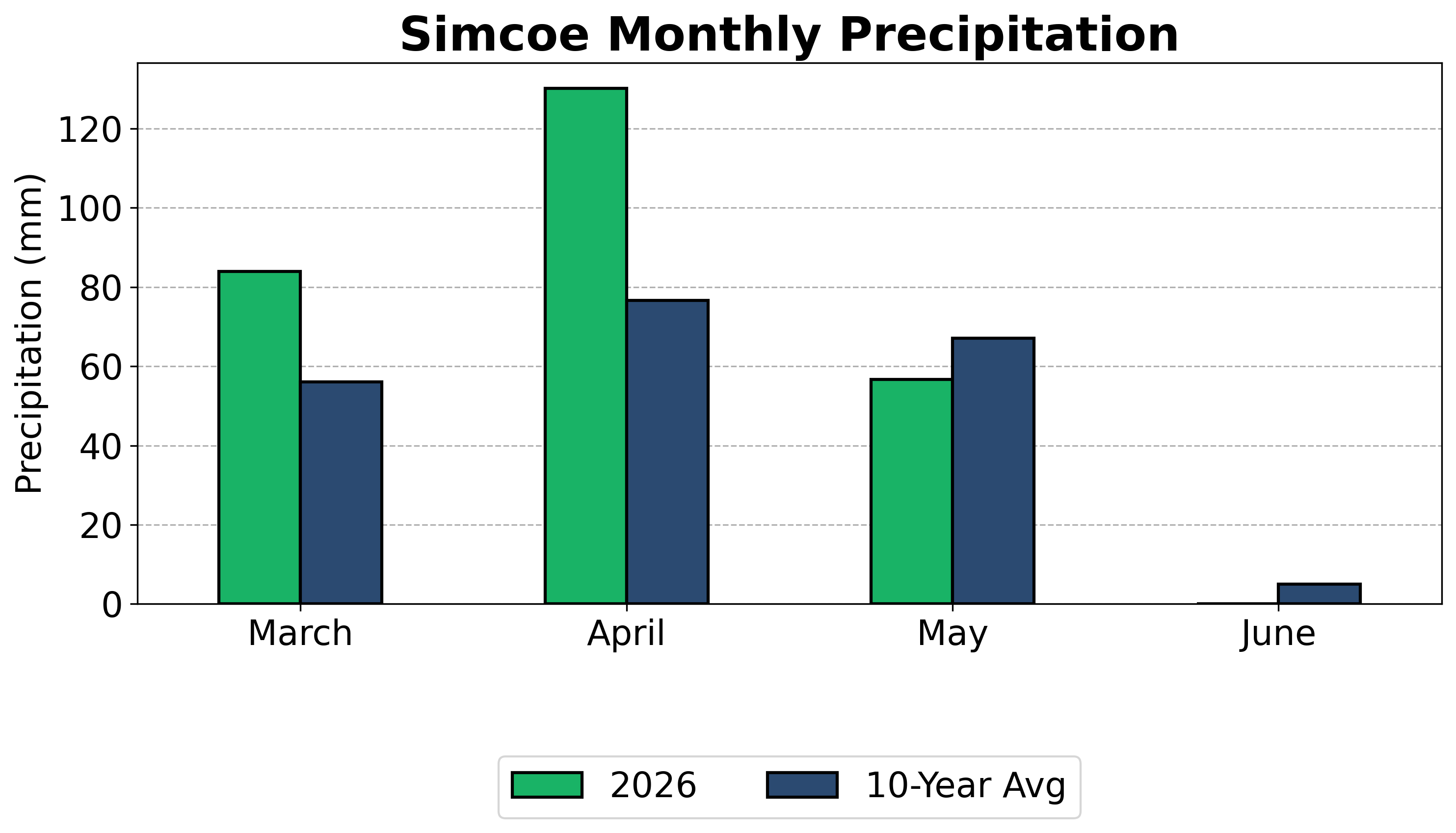
Simcoe

Sudbury


Thunder Bay


Timiskaming


Wellington Centre


Wellington North


0 comments on “VCR – Vegetable Crop Report – June 4th, 2026”