


Crop Updates
Brassica Crops – This is likely the last week for transplanting late broccoli in southern regions. Alternaria pressure has been high in many fields since there has been ideal environmental conditions for disease development. For a list full list of registered products on Alternaria for broccoli, Brussels sprouts, cabbage, cauliflower, and kale go to the Ontario Crop Protection Hub. Clubroot symptoms are pronounced in fields that have had excess moisture. In cabbage, fields with a history of Sclerotinia white mould are showing disease development and some fields also have bacterial soft rot. Keep on the lookout for downy mildew symptoms, especially in the headland where the crop may be shaded or are protected by winds drying out leaves (Figure 1). Diamondback moths, imported cabbageworms, tarnished plant bugs and aphids continue to remain elevated in many areas. Incorporate crop debris as soon as possible to limit the amount of inoculum and pest development that can spill over to later plantings.


Cucumbers – Downy mildew was reported in Southern Michigan and Northern Ohio earlier this week. We still haven’t seen it here in Ontario, but now that it is in the Great Lakes region, growers should definitely maintain their fungicide programs. We are seeing some other foliar diseases in the Ontario crop, including powdery mildew. Powdery mildew will not be controlled by the standard downy mildew preventative program. Chlorothalonil will provide a basic level of protection against powdery. As with most foliar diseases, the best controls are preventative. There are several fungicides with more targeted powdery mildew activity, however they will not provide downy control.
Spider mites continue to be a problem in both Kent and Elgin/Norfolk. In-harvest control options are limited as most products have a longer pre-harvest interval. Frequent scouting can help identify hot-spots before they spread, offering the option of spot treatments or border sprays that can be worked around the harvest interval requirements.
Garlic – With garlic in storage, plans for next years crop are underway. If you are purchasing planting stock for this fall, remember that low levels of stem and bulb nematodes can be found in planting stock that otherwise looks great. It is a good idea to conduct stem and bulb nematode testing before purchasing planting stock from another farm. Testing one bulb for every 200 lbs of planting stock or one in every 1000 bulbs could be a good indication of if there are nematodes present. Here’s an article summarizing the things to consider before purchasing new garlic planting stock: https://onvegetables.com/2022/08/05/garlicplanting/. Clean seed is available for purchase from the SPUD Unit Clean Seed Program for the 2026-27 Season. Ontario growers who are members of the Garlic Growers Association of Ontario (GGAO) are now able to order clean seed (roundels) in multiples of 50 by E-mailing garlicgrowersofontario@gmail.com. Roundels take an average of 2-3 growing seasons to reach a marketable size. Field trials between 2021-2025 show an average of a 25% increase in yield if planting a similar size clove of clean seed compared to a conventionally grown clove. The full results of this trial and a summary of the benefits of clean seed can be found in this previous article published October 2025: https://onvegetables.com/2025/10/10/cleanseed/.

Onion – Transplants continue to be harvested, and direct seeded onions are starting to lodge. With cool mornings, fog, dews and extended periods of leaf wetness, conditions have been favourable for onion downy mildew in many regions (Figure 4). A full list of products registered for onion downy mildew can be found on the Ontario Crop Protection Hub. Bacterial rots are common on plants that are in lower areas of the field that received flooding over the past month (Figure 5). Stemphylium leaf blight and tipburn continues to progress. Royal MH can be applied for sprout control when 50% of the crop has lodged and there are green tops that are still present to absorb the product. Apply at least 10 days before the crop is harvested. Now is a great time to assess damage plots that were put up in the spring. Determining the number of plants that survived out of the 100 germinated/transplanted plants that were counted at the start of the season is valuable information to determine what percentage of plants died due to onion maggot, drought, or some other pest.


Pumpkins and Squash – Mid-to-late August is prime powdery mildew time. There are a lot of good fungicide products to choose from, at a wide range of price points. When selecting products, keep in mind that there is widespread powdery mildew resistance to the group 11 fungicides and some of the group 3 products as well. Always rotate between the chemical families to prevent the development of new resistant strains.
In areas where spider mites have been identified in cucumbers, keep a close eye out on the other cucurbit crops. Damage can be hard to spot before they have caused substantial stress to the crop. They often build up at the field edges, especially close to gravel roads or dusty laneways, however hot spots can occur in the field centers as well.
Sweet Corn – Corn earworm moths are now on the move. Moth catches in the mid-west are starting to increase, which is a sign that we will also begin to see increased pressure here in Ontario. Moth activity tends to be very spotty and often tracks with severe storms. Protect plants as soon as the green silks appear.
Aphid populations have also been high in some sweet corn fields this week. Aphid activity pre-tassel can impact the kernel set. Developing populations on the ears will impact marketability. We often see good populations of aphid predators in sweet corn fields which may help maintain clean plants under low aphid pressure. Keep in mind that populations can explode quite quickly. Especially under hot, dry conditions.
Pest Degree Day Forecasting
| County | Carrot Rust Fly | Onion Maggot | Carrot Weevil | Aster Leafhopper | Tarnished Plant Bug | Cabbage Maggot | Seedcorn Maggot | European Corn Borer |
| THRESHOLD | 329-395, 1399-1711 | 210-700, 1025-1515 | 138-156, 455+ | 128+ | 40+ | 314-398, 847-960, 1446-1604 | 200-350, 600-750, 1000-1150 | See legend below |
| Bruce*** | 1456 | 1331 | 977 | 767 | 500 | 1090 | 1331 | 671 |
| Essex* | 2027 | 1884 | 1473 | 1215 | 862 | 1607 | 1884 | 1092 |
| Chatham-Kent* | 1880 | 1738 | 1335 | 1088 | 763 | 1466 | 1738 | 976 |
| Norfolk** | 1741 | 1604 | 1227 | 995 | 675 | 1347 | 1604 | 883 |
| Huron*** | 1611 | 1478 | 1106 | 882 | 586 | 1226 | 1478 | 778 |
| Wellington** | 1558 | 1431 | 1078 | 860 | 568 | 1190 | 1431 | 757 |
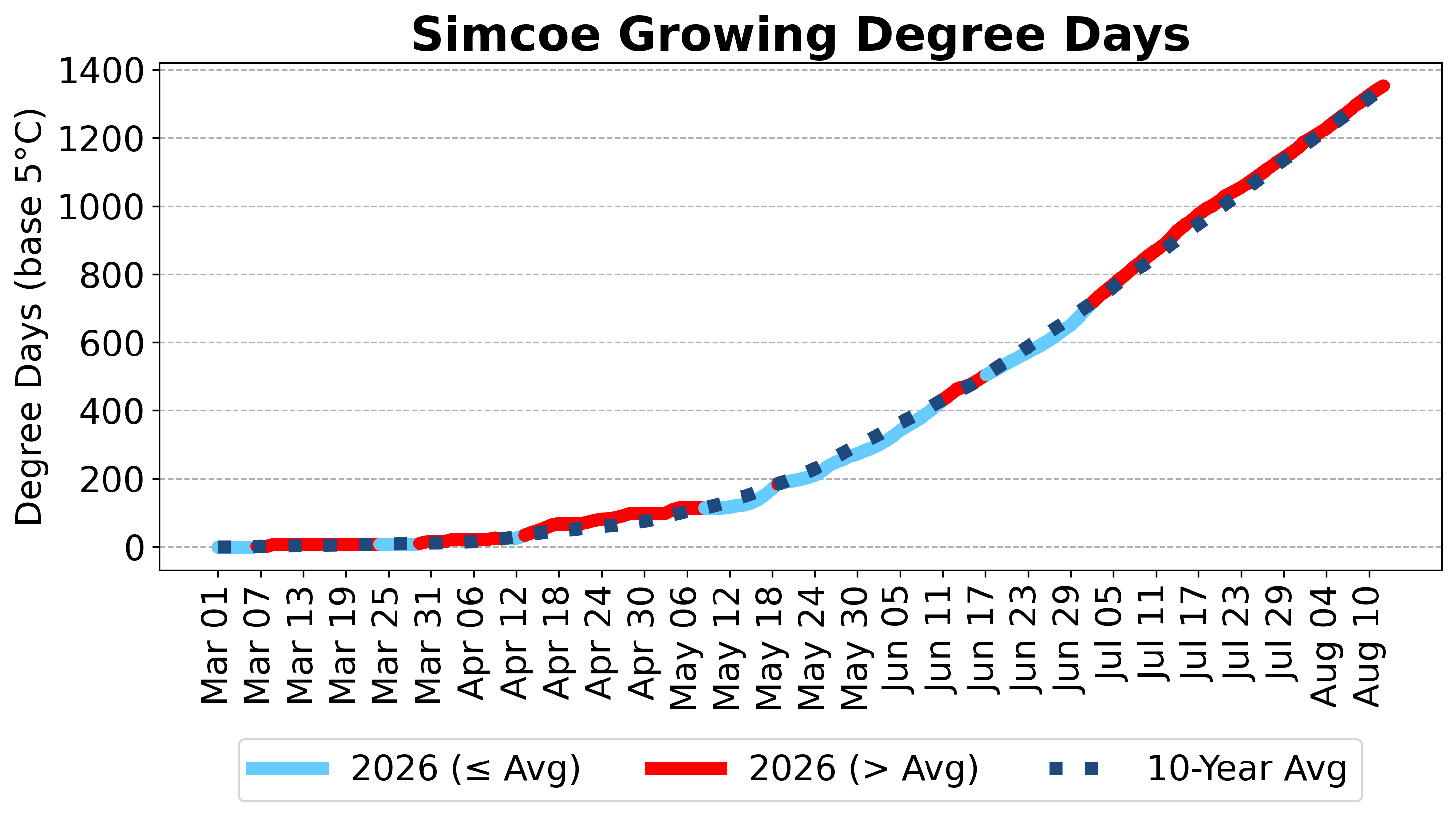
| Simcoe County*** | 1602 | 1475 | 1125 | 908 | 620 | 1238 | 1475 | 807 |
| Durham*** | 1690 | 1560 | 1198 | 975 | 679 | 1315 | 1560 | 872 |
| Peterborough | 1601 | 1473 | 1117 | 899 | 601 | 1232 | 1473 | 796 |
| Kemptville*** | 1697 | 1570 | 1204 | 985 | 690 | 1322 | 1570 | 883 |
| Sudbury*** | 1382 | 1272 | 970 | 785 | 527 | 1068 | 1272 | 696 |
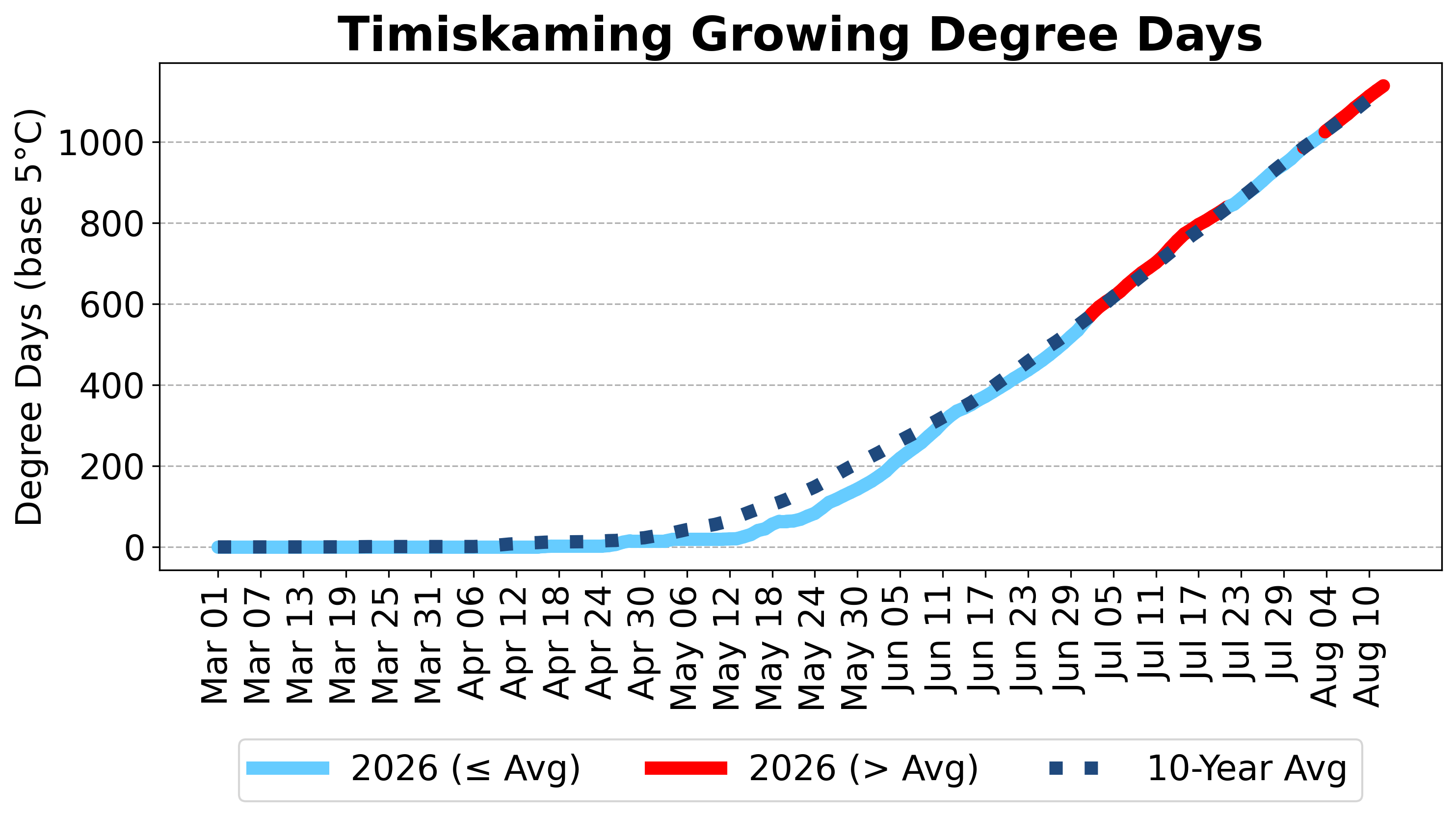
| Timiskaming*** | 1352 | 1241 | 946 | 763 | 504 | 1040 | 1241 | 674 |
| Lambton** | 1785 | 1646 | 1260 | 1032 | 716 | 1384 | 1646 | 923 |
| Thunder Bay | 1252 | 1144 | 854 | 682 | 441 | 944 | 1144 | 599 |
| Middlesex* | 1796 | 1660 | 1278 | 1046 | 727 | 1401 | 1660 | 935 |
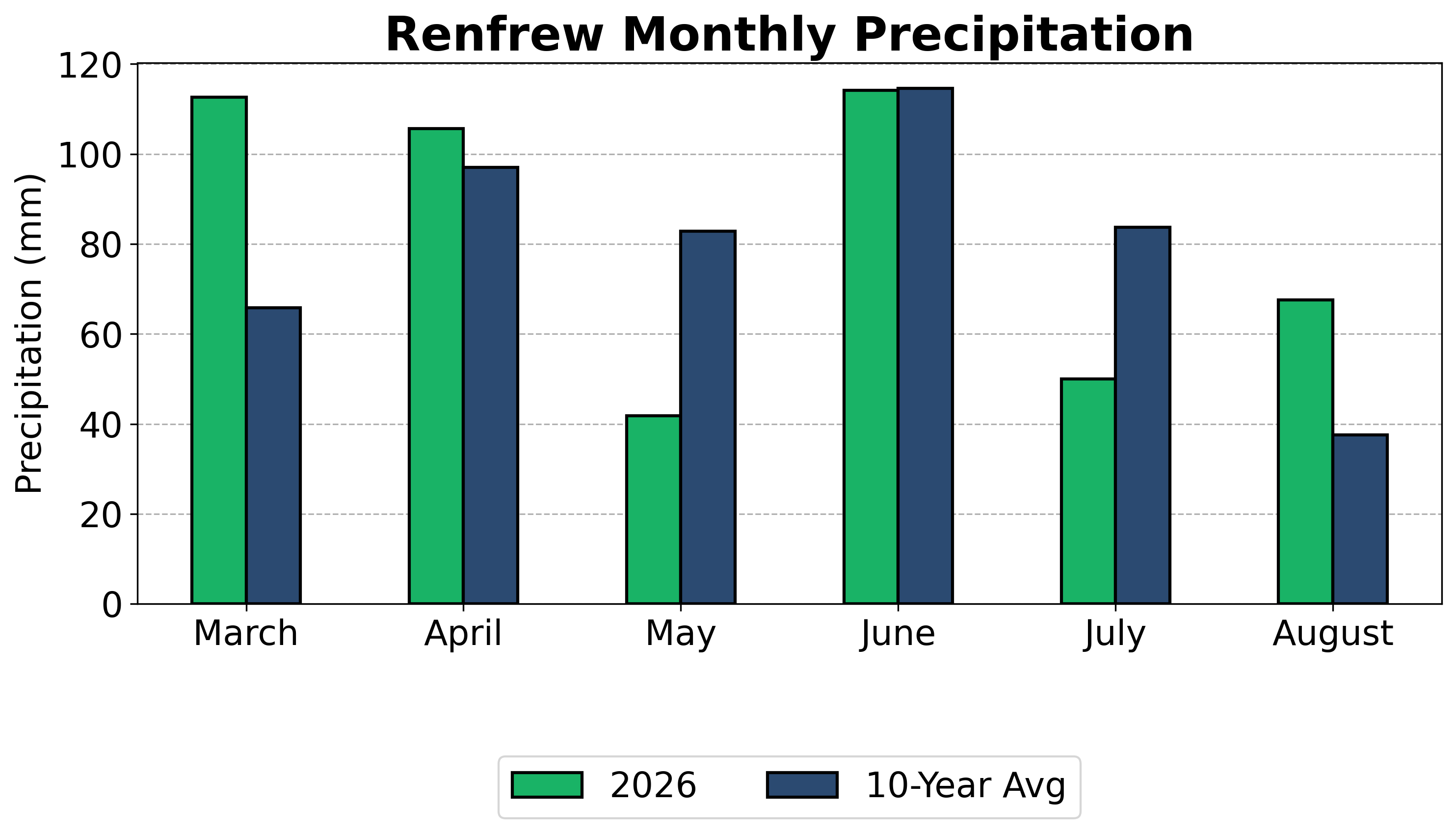
| Renfrew | 1465 | 1354 | 1038 | 852 | 606 | 1140 | 1354 | 768 |
*- Bivoltine region for ECB. First Peak Catch: 300-350 DD, Second Peak Catch 1050-1100 DD
**- Overlap region for ECB. First Peak Catch: 300-350 DD Second Peak Catch 650-700 DD, Third Peak Catch 1050-1100 DD
***-Univoltine region for ECB. Peak Catch 650-700 DD
Use these thresholds as a guide, always confirm insect activity with actual field scouting and trap counts
Select a region below for the latest weather, crop and pest degree day information:
Bruce

Chatham-Kent


Durham

Essex


Huron


Kemptville


Lambton


Middlesex
Norfolk


Peterborough


Renfrew

Simcoe
Sudbury


Thunder Bay


Timiskaming
Wellington Centre


Wellington North


0 comments on “VCR – Vegetable Crop Report – August 13th”