


Crop Updates
Brassica Crops – Conditions have been favourable for Alternaria. Multiple species of Alternaria including A. alternata, A. brassicae and A. brassicola can create lesions on different parts of Brassica crops including the marketable heads, leaves, and sprouts. It is important to rotate fungicides from different FRAC groups to reduce the chance of fungicide resistance to Alternaria. For registered fungicides on Brassica Alternaria on broccoli, Brussels sprouts, cabbage and cauliflower, see the Ontario Crop Protection Hub. Be on the lookout for symptoms of black rot –Xanthamonas campestris pv. campestris (Figure 1). Black rot spreads rapidly during warm weather and fields with overhead irrigation. The bacterial cells enter through wounds or natural openings on the leaf tips. The Xanthamonas bacteria often finds it’s way to farms in infected seeds and then bacterial cells overwinter on used trays, propagation equipment, and crop debris for up to three years. Infected plants have characteristic ‘v’ shaped lesions and systemically infected plants have chlorotic areas anywhere on the leaf. When leaves are held up to the sun, veins filled with Xanthamonas bacteria are stained black in the chlorotic areas on the leaf. The best management strategy is prevention through certified clean seed, sanitation of propagation equipment/tools, a four-year crop rotation, and rogueing and then burying all crop debris. To read more about black rot, refer to CropIPM.

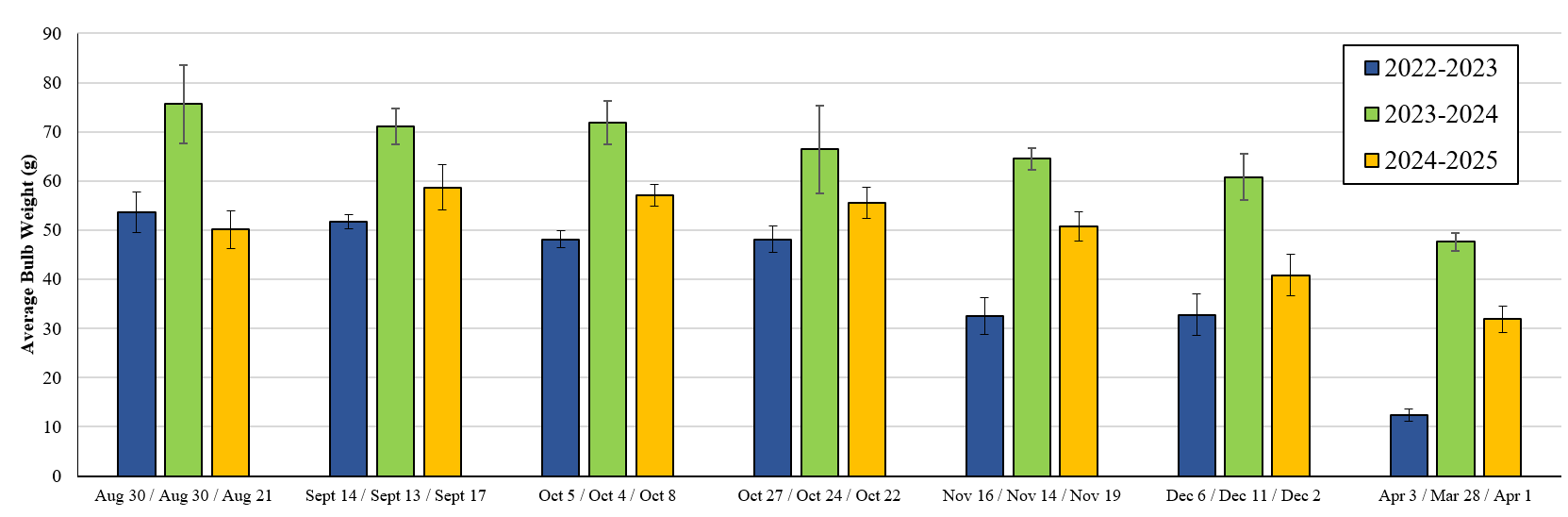
Garlic – If you are considering purchasing new planting stock for the 2026-2027 field season, remember that low levels of stem and bulb nematodes can be found in planting stock. Testing one bulb for every 200 lbs of planting stock or one in every 1000 bulbs could be a good indication of if there are nematodes present. Along with avoiding stem and bulb nematode, here are some other things to consider before purchasing new planting stock: https://onvegetables.com/2022/08/05/garlicplanting/. Clean seed is still available for purchase from the SPUD Unit Clean Seed Program for the 2026-27 Season. Ontario growers who are members of the Garlic Growers Association of Ontario (GGAO) are now able to order clean seed (roundels) in multiples of 50 by E-mailing garlicgrowersofontario@gmail.com. Roundels take an average of 2-3 growing seasons to reach a marketable size. Field trials between 2021-2025 show an average of a 25% increase in yield if planting a similar size clove of clean seed compared to a conventionally grown clove. The full results of this trial and a summary of the benefits of clean seed can be found in this previous article published October 2025: https://onvegetables.com/2025/10/10/cleanseed/. Once planting stock is obtained, consider planting in September opposed to October. Results from the past 3 years of planting date trials indicate that the later garlic is planted, the greater the amount of risk there is to losing yields at harvest the following July (Figure 2). To determine if planting earlier would result in winterkill or have negative impacts on yield, a planting date trial was conducted in Dashwood from 2022 to 2025 with seven planting dates starting in August and continuing roughly every three weeks until December, along with a single planting date in March or April every spring. In all three years, earlier planting dates had better winter survival, even though they also had the most leaves emerged prior to snow cover / the ground freezing. In the first two years the earliest dates also had the highest yields but there was a slight decrease in yields if the cloves were planted as early as August 21st. The full results of this trial can also be found here: https://onvegetables.com/2026/08/18/when-is-the-best-time-to-plant-garlic/
Onions – Harvest of transplants continues and some direct seeded onions are starting to lodge. Downy mildew has been confirmed to be active in the Holland Marsh (Simcoe/York Counties) as well as Wellington and Durham counties. A full list of products registered for onion downy mildew can be found on the Ontario Crop Protection Hub. Past research conducted by the Muck Crops Research Station (Ontario Crops Research Centre – Bradford) has shown that Orondis Ultra (groups 40/49), Zampro (groups 45/40), and Orondis Gold (groups 4/49) are the most effective for controlling this disease. These products are most effective when they are applied as a protective application before infection can occur. Royal MH can be applied for sprout control when 50% of the crop has lodged and there are green tops that are still present to absorb the product. Apply at least 10 days before the crop is harvested. As onions in neighbouring fields are harvested, be on the lookout for quick jumps in the number of thrips (Figure XX). Now is a great time to assess damage plots that were put up in the spring. Determining the number of plants that survived out of the 100 germinated/transplanted plants that were counted at the start of the season is valuable information to determine what percentage of plants died due to onion maggot or some other pest. The 2026 Muck Crops Research Station Grower Field Day is September 3rd from 8:30 AM– 4:00 PM at the Muck Crops Research Station (Ontario Crops Research Centre – Bradford). Check out cultivar evaluations and research trials at 1125 Woodchoppers Lane, King, ON.

Pest Degree Day Forecasting
| County | Carrot Rust Fly | Onion Maggot | Carrot Weevil | Aster Leafhopper | Tarnished Plant Bug | Cabbage Maggot | Seedcorn Maggot | European Corn Borer |
| THRESHOLD | 329-395, 1399-1711 | 210-700, 1025-1515 | 138-156, 455+ | 128+ | 40+ | 314-398, 847-960, 1446-1604 | 200-350, 600-750, 1000-1150 | See legend below |
| Bruce*** | 1554 | 1423 | 1052 | 829 | 544 | 1170 | 1423 | 727 |
| Essex* | 2145 | 1996 | 1567 | 1297 | 926 | 1707 | 1996 | 1168 |
| Chatham-Kent* | 1989 | 1841 | 1420 | 1162 | 818 | 1558 | 1841 | 1043 |
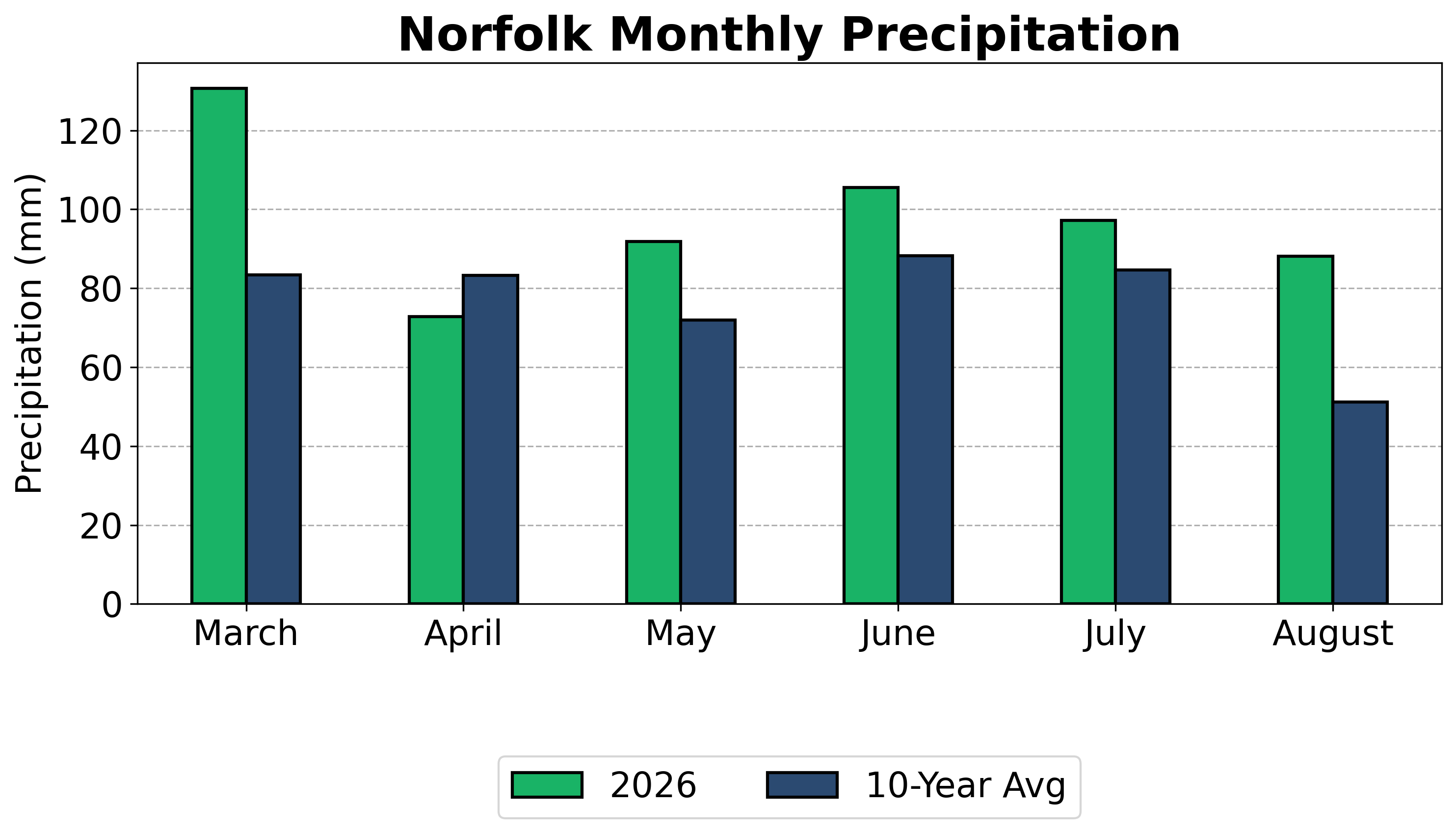
| Norfolk** | 1846 | 1703 | 1308 | 1064 | 726 | 1434 | 1703 | 946 |
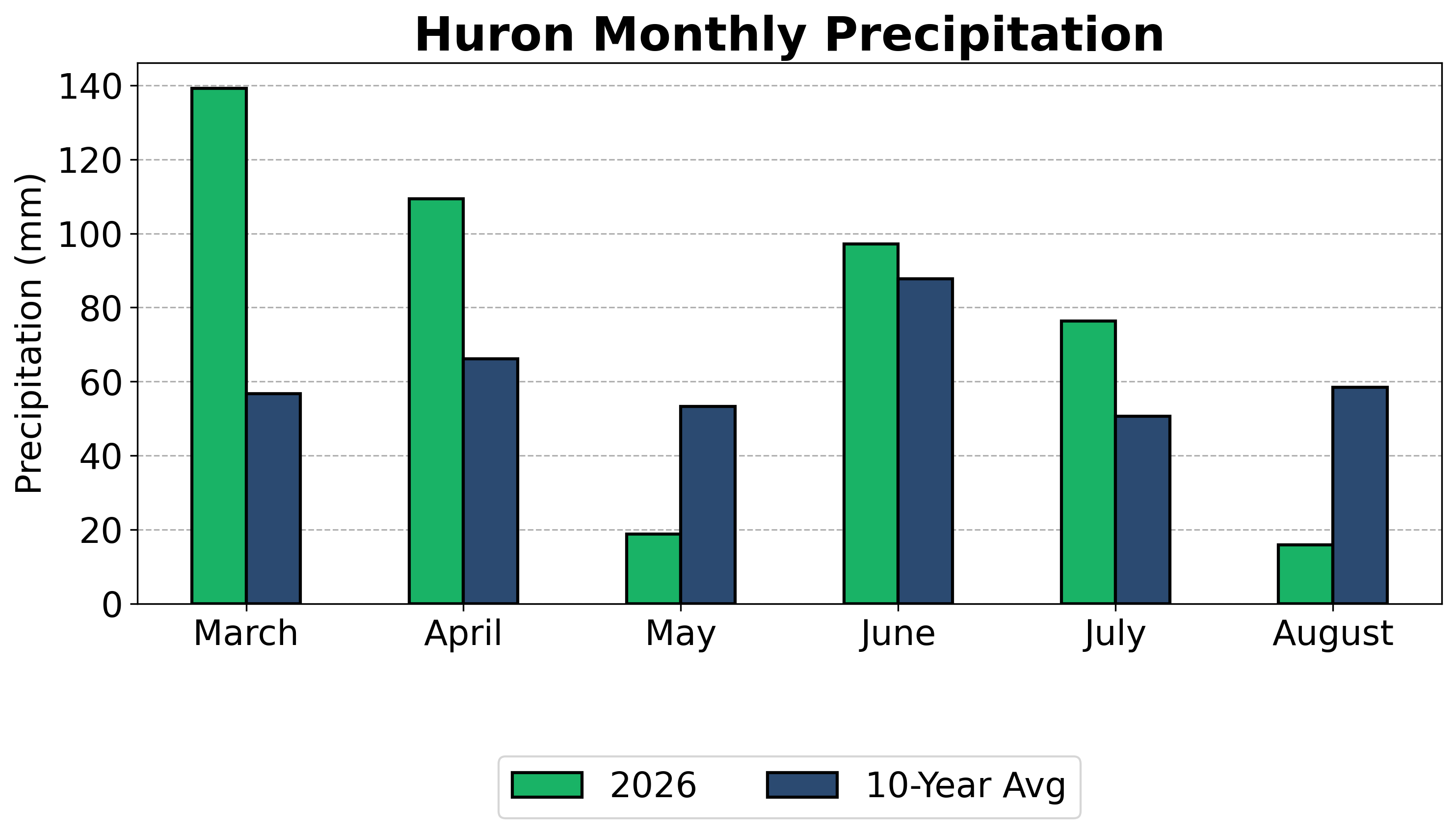
| Huron*** | 1708 | 1569 | 1180 | 944 | 629 | 1306 | 1569 | 834 |
| Wellington** | 1655 | 1522 | 1151 | 921 | 611 | 1269 | 1522 | 812 |
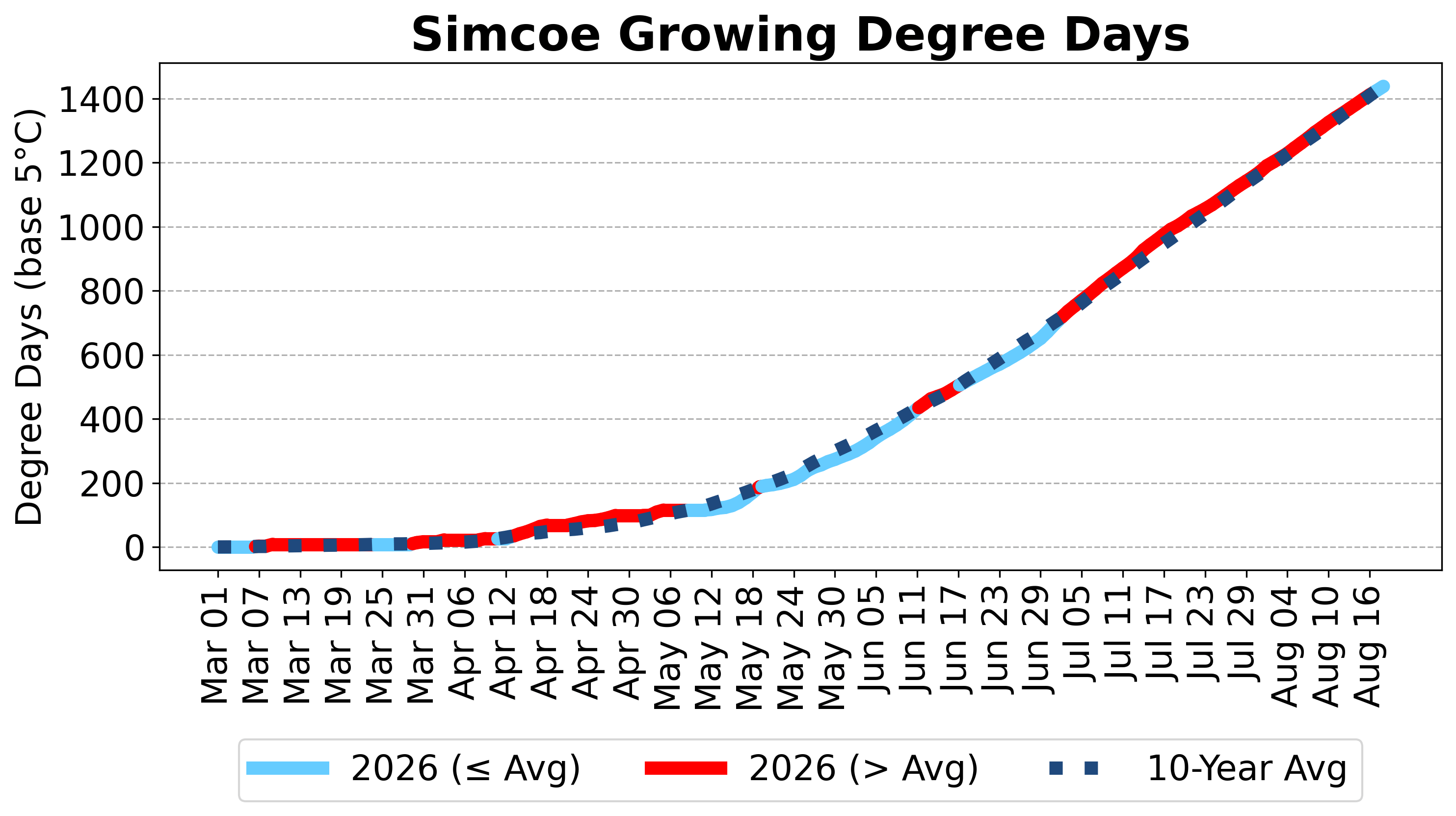
| Simcoe County*** | 1699 | 1566 | 1198 | 969 | 663 | 1317 | 1566 | 861 |
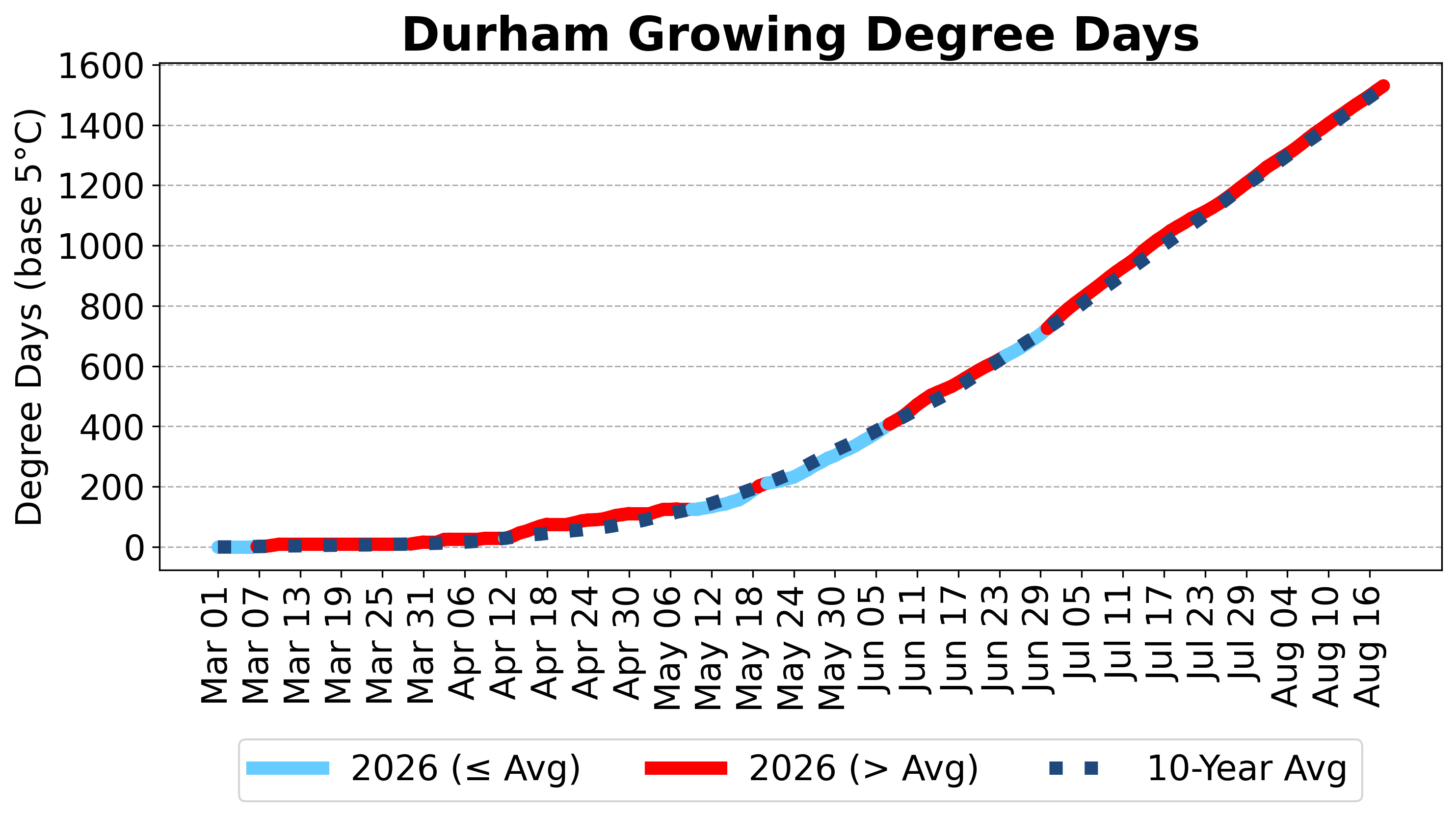
| Durham*** | 1797 | 1661 | 1280 | 1045 | 732 | 1404 | 1661 | 937 |
| Peterborough | 1700 | 1565 | 1192 | 962 | 646 | 1313 | 1565 | 853 |
| Kemptville*** | 1793 | 1660 | 1276 | 1045 | 732 | 1400 | 1660 | 937 |
| Sudbury*** | 1473 | 1357 | 1037 | 840 | 564 | 1141 | 1357 | 745 |
| Timiskaming*** | 1438 | 1322 | 1009 | 813 | 536 | 1108 | 1322 | 719 |
| Lambton** | 1892 | 1747 | 1343 | 1104 | 769 | 1473 | 1747 | 989 |
| Thunder Bay | 1337 | 1223 | 915 | 731 | 473 | 1012 | 1223 | 642 |
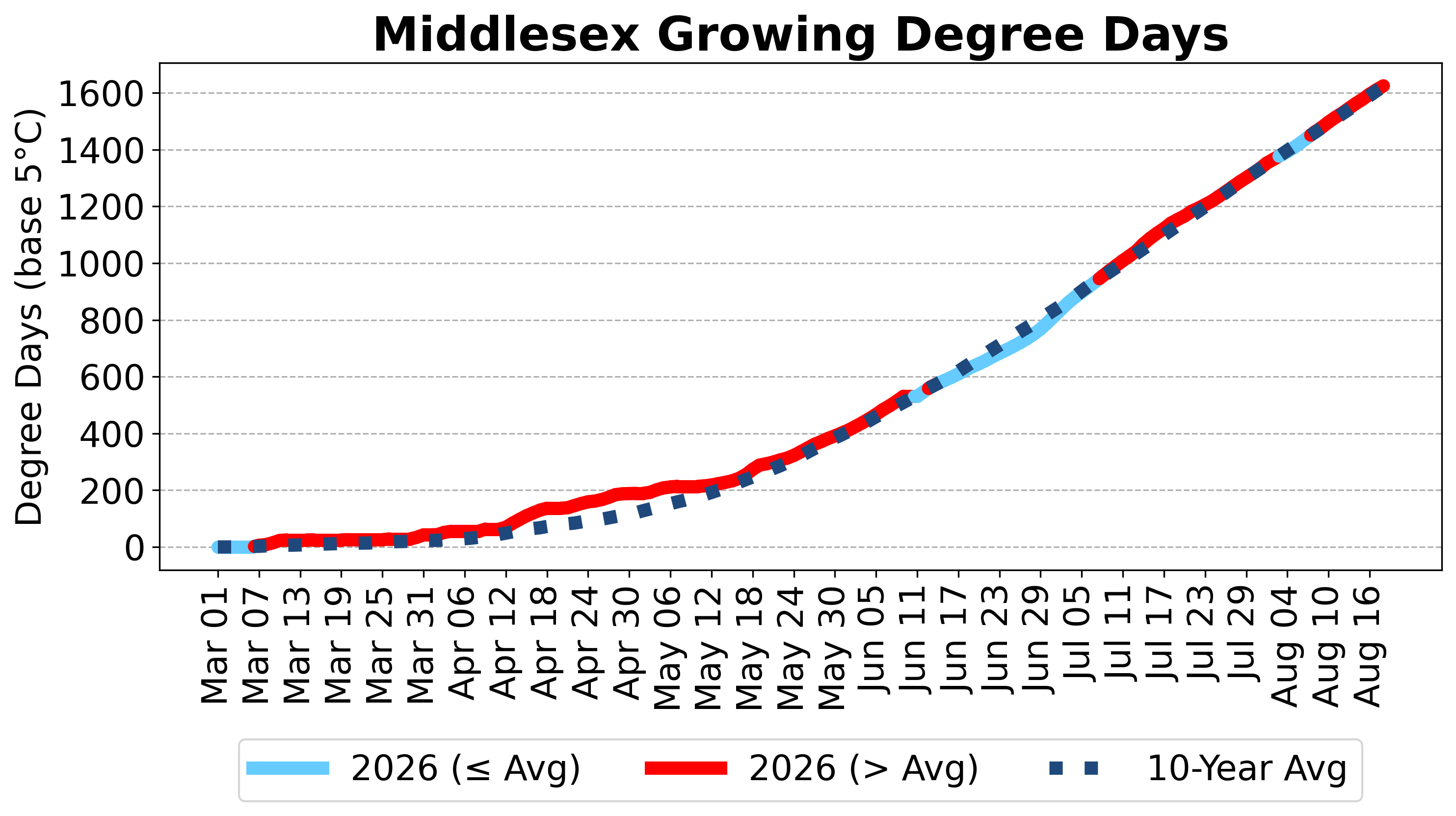
| Middlesex* | 1904 | 1762 | 1362 | 1118 | 781 | 1491 | 1762 | 1001 |
| Renfrew | 1548 | 1432 | 1102 | 906 | 645 | 1209 | 1432 | 817 |
*- Bivoltine region for ECB. First Peak Catch: 300-350 DD, Second Peak Catch 1050-1100 DD
**- Overlap region for ECB. First Peak Catch: 300-350 DD Second Peak Catch 650-700 DD, Third Peak Catch 1050-1100 DD
***-Univoltine region for ECB. Peak Catch 650-700 DD
Use these thresholds as a guide, always confirm insect activity with actual field scouting and trap counts
Select a region below for the latest weather, crop and pest degree day information:
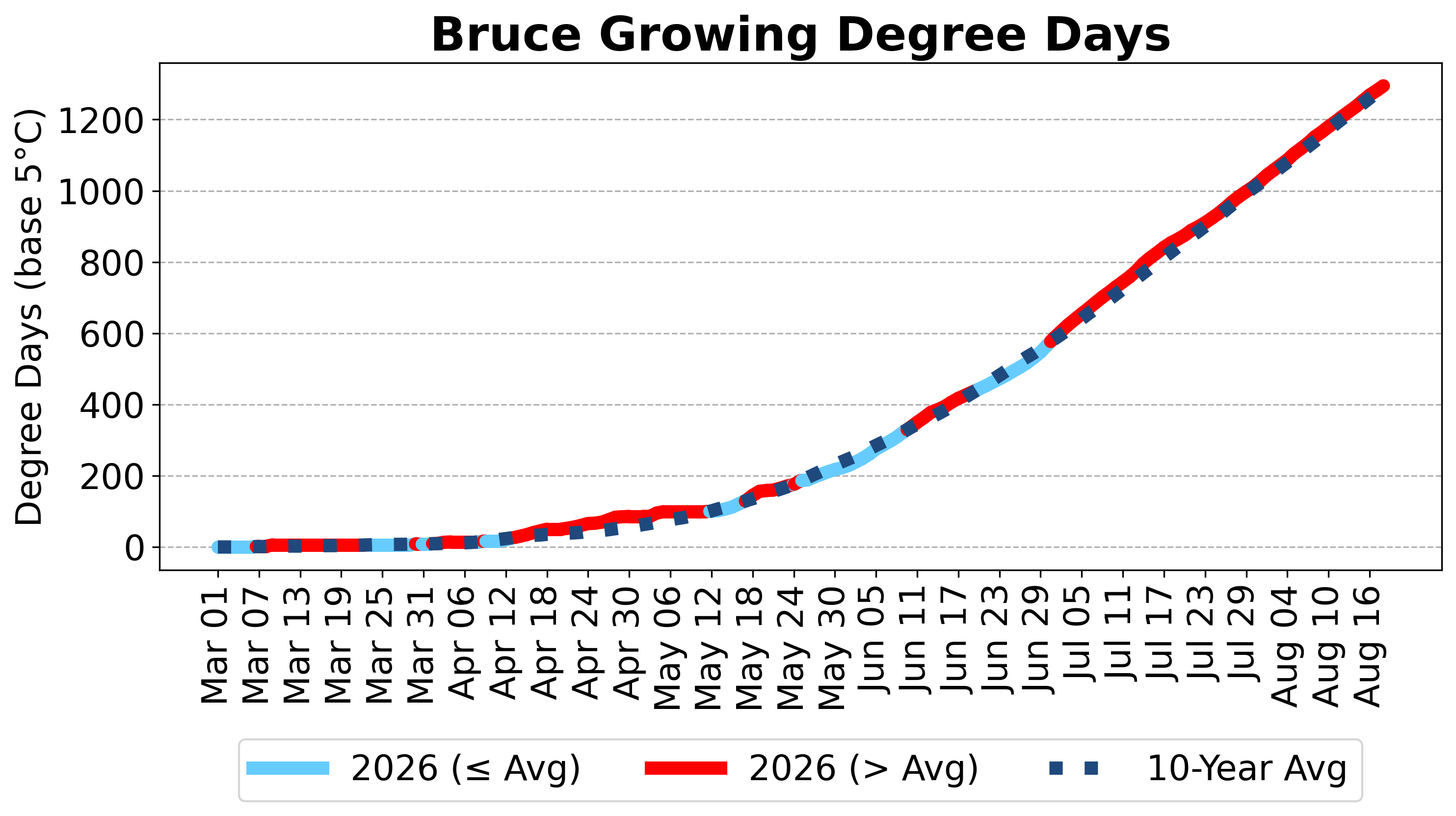
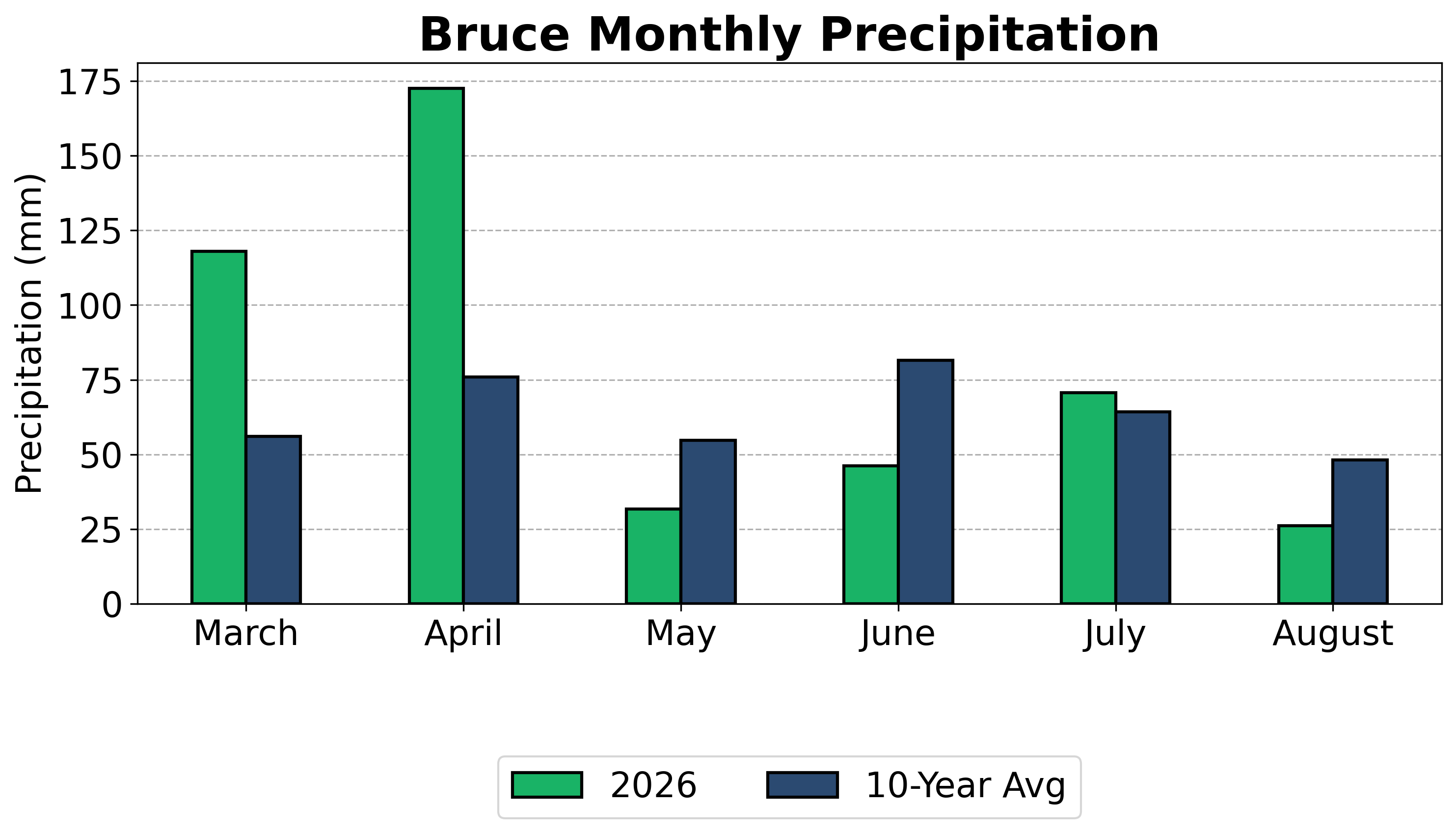
Bruce
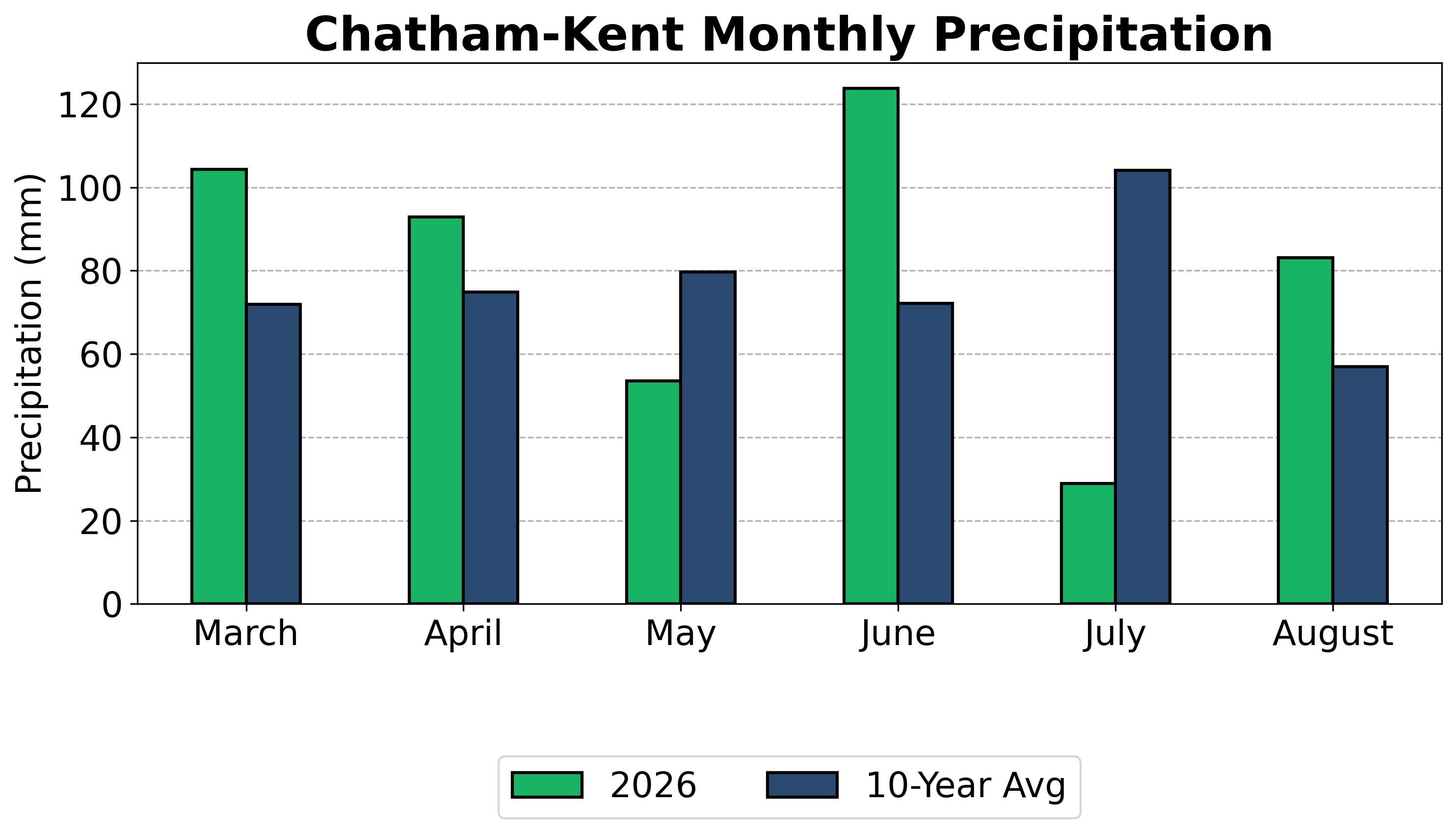
Chatham-Kent

Durham
Essex


Huron

Kemptville


Lambton


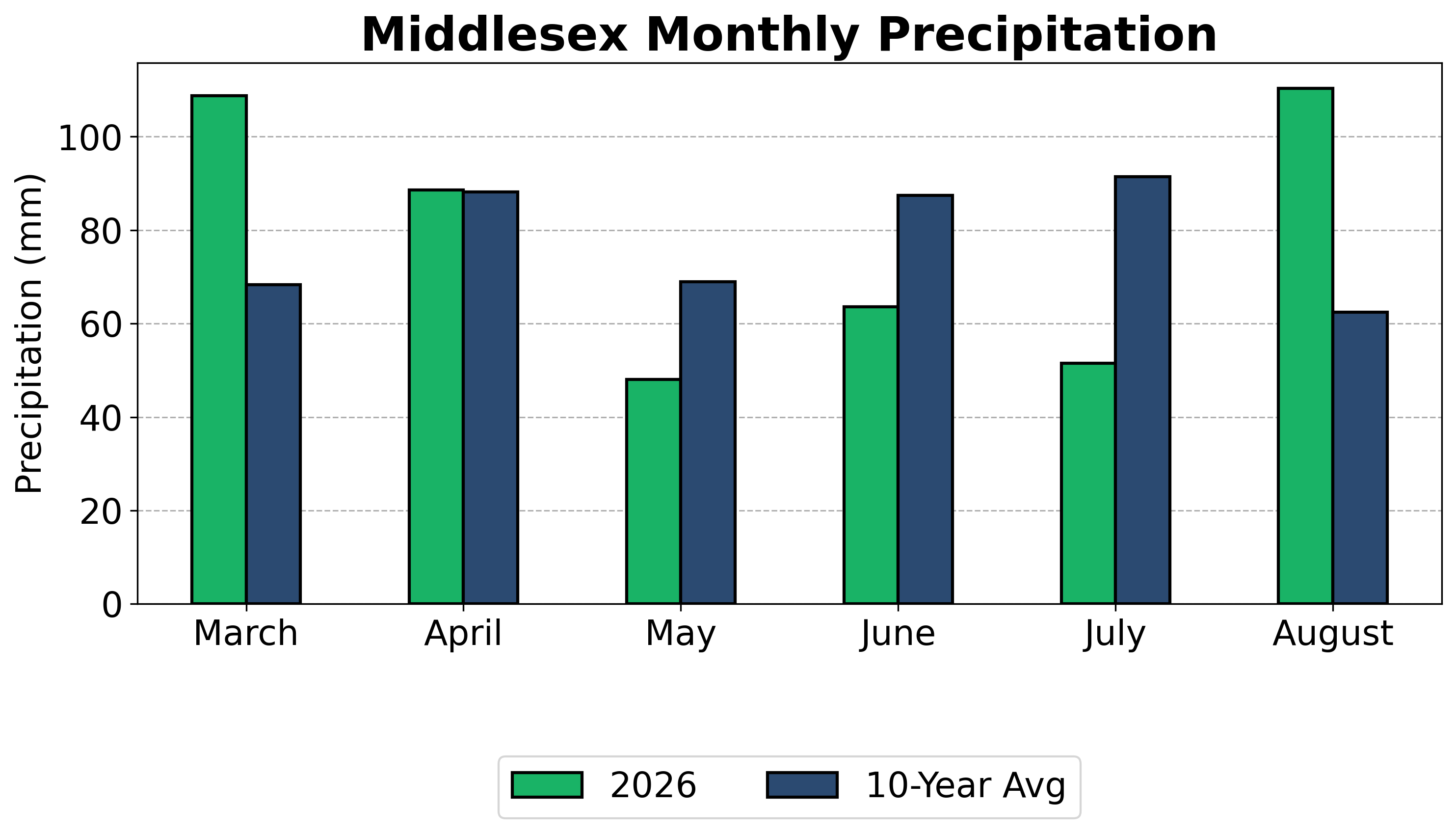
Middlesex
Norfolk

Peterborough


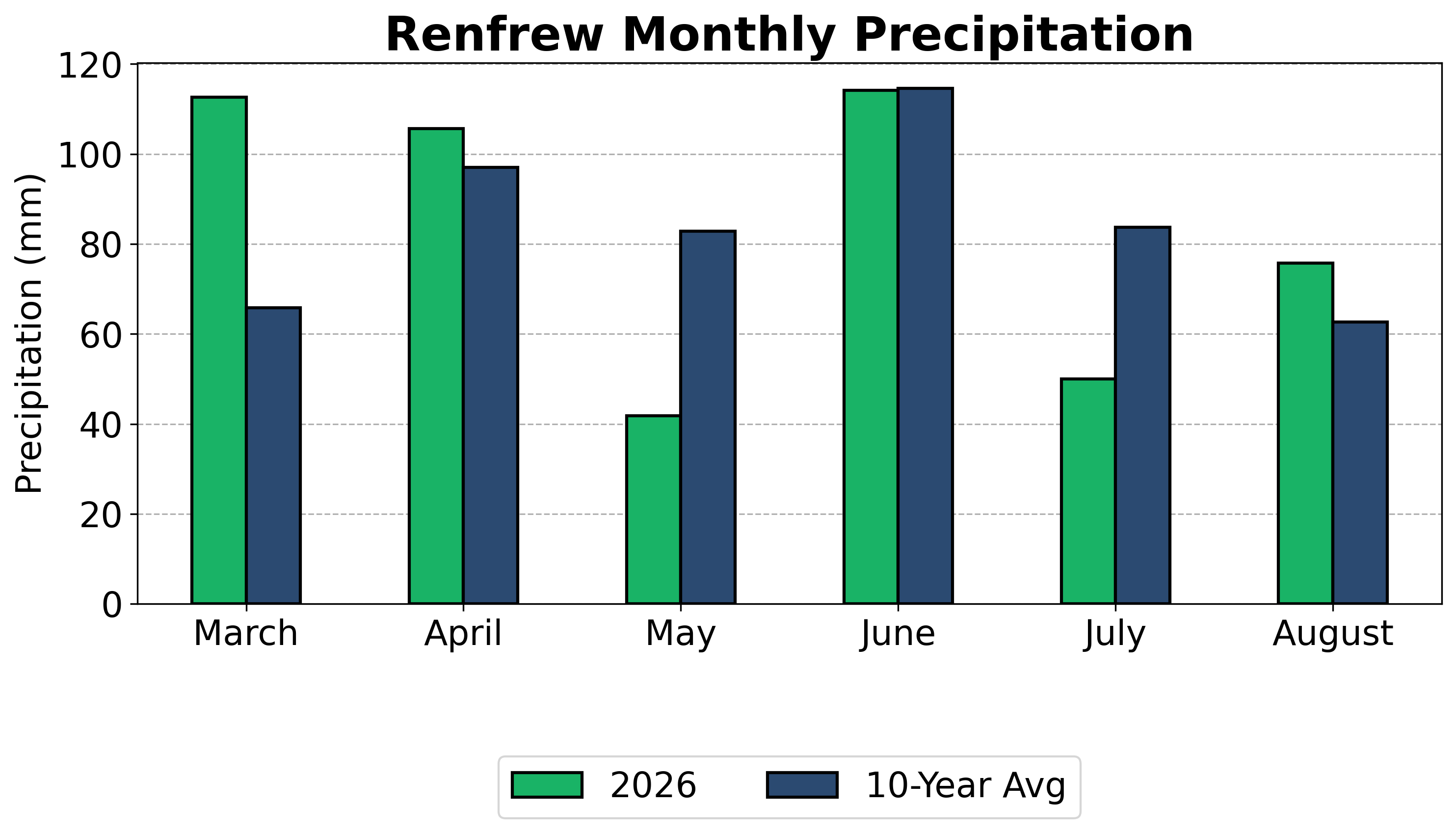
Renfrew

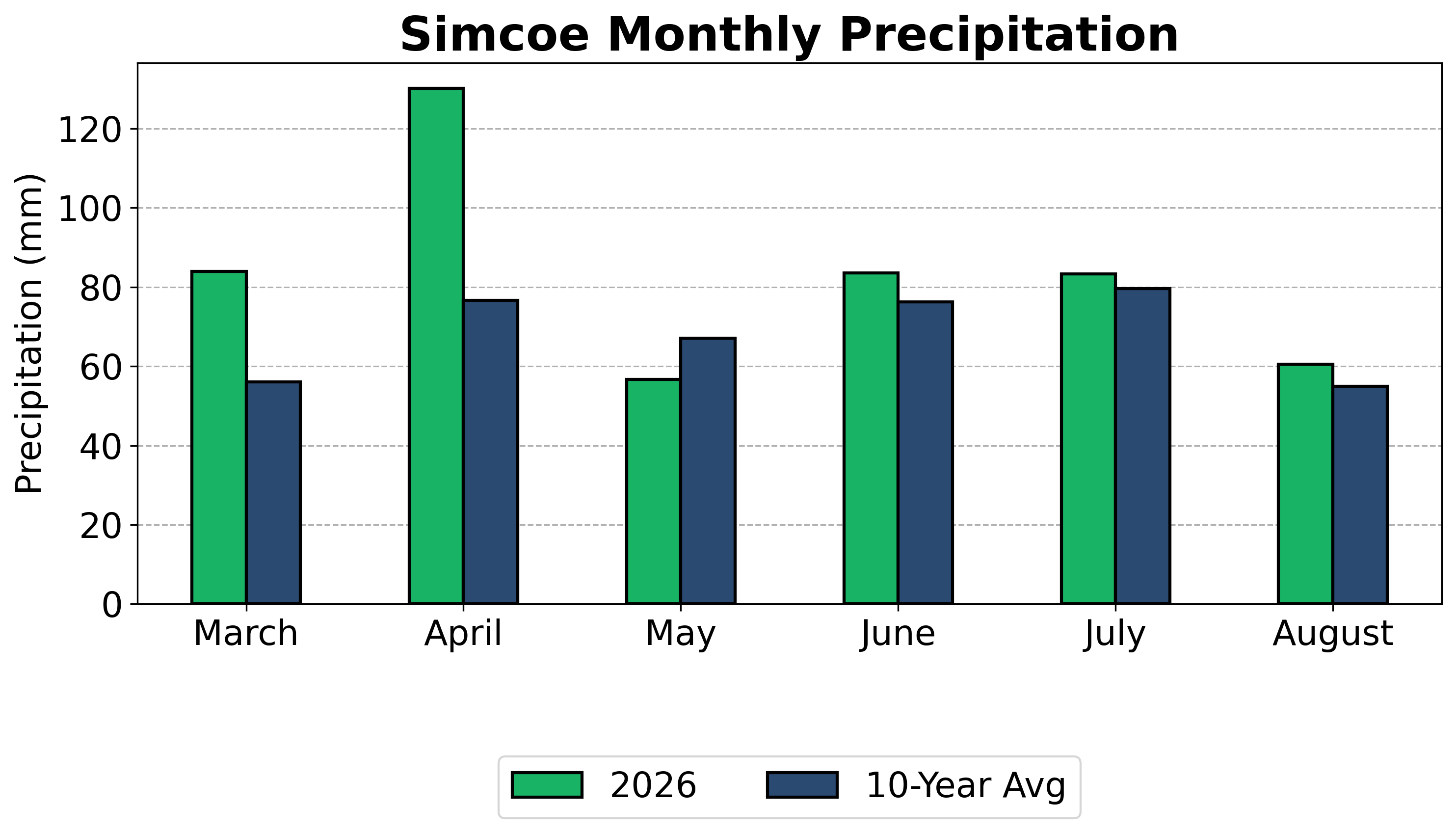
Simcoe
Sudbury


Thunder Bay


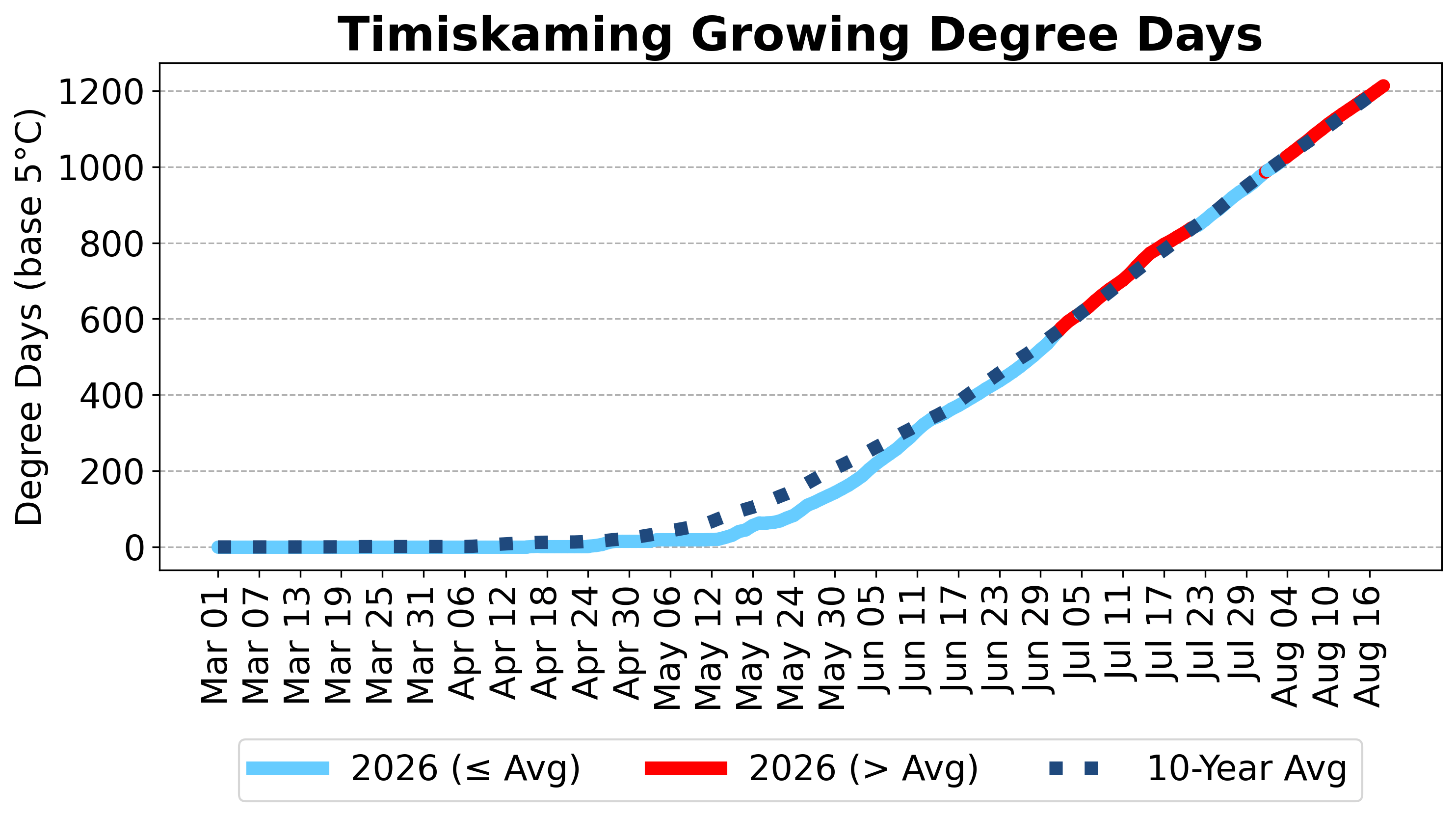
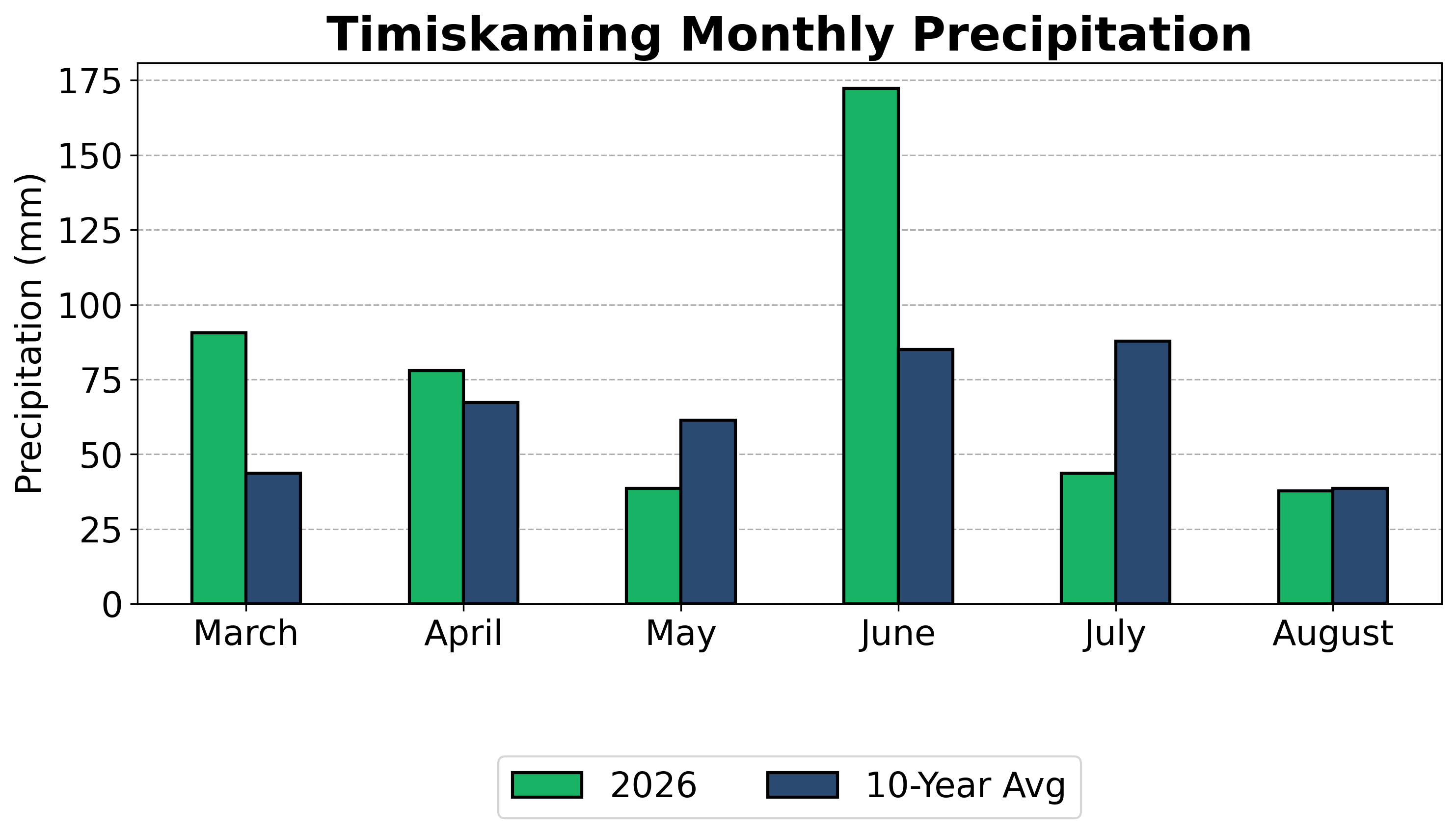
Timiskaming
Wellington Centre


Wellington North


0 comments on “VCR – Vegetable Crop Report – August 20th”