


Crop Updates
Brassica Crops – Conditions continue to be favourable for Alternaria, downy mildew and white mould. As canopies fill in, some insects, like cabbage aphids are becoming harder to manage. If cross-striped cabbageworm or zebra caterpillars are found, do not include them in your main lepidopteran threshold counts that include cabbage looper, diamondback moth and imported cabbageworm. (Figure 1-2). Both zebra and cross-striped cabbageworm caterpillars tend to feed in groups and are found in one or two spots in the field and are unlikely to be found throughout the entire field. Zebra caterpillars are black with yellow strips and white spots while the cross-striped cabbageworm have black and white stripes across the body with yellow undersides.


Carrots – Monitor for red leaves as the first sign of aster yellows (Figure 1). Infected plants will have excessive shoot and root growth (Figure 2). Leafhopper numbers have been quite high this season but infectivity numbers have been low.
Now that most row canopies are now closed, look for signs of white mould developing between the rows (Figure 3)


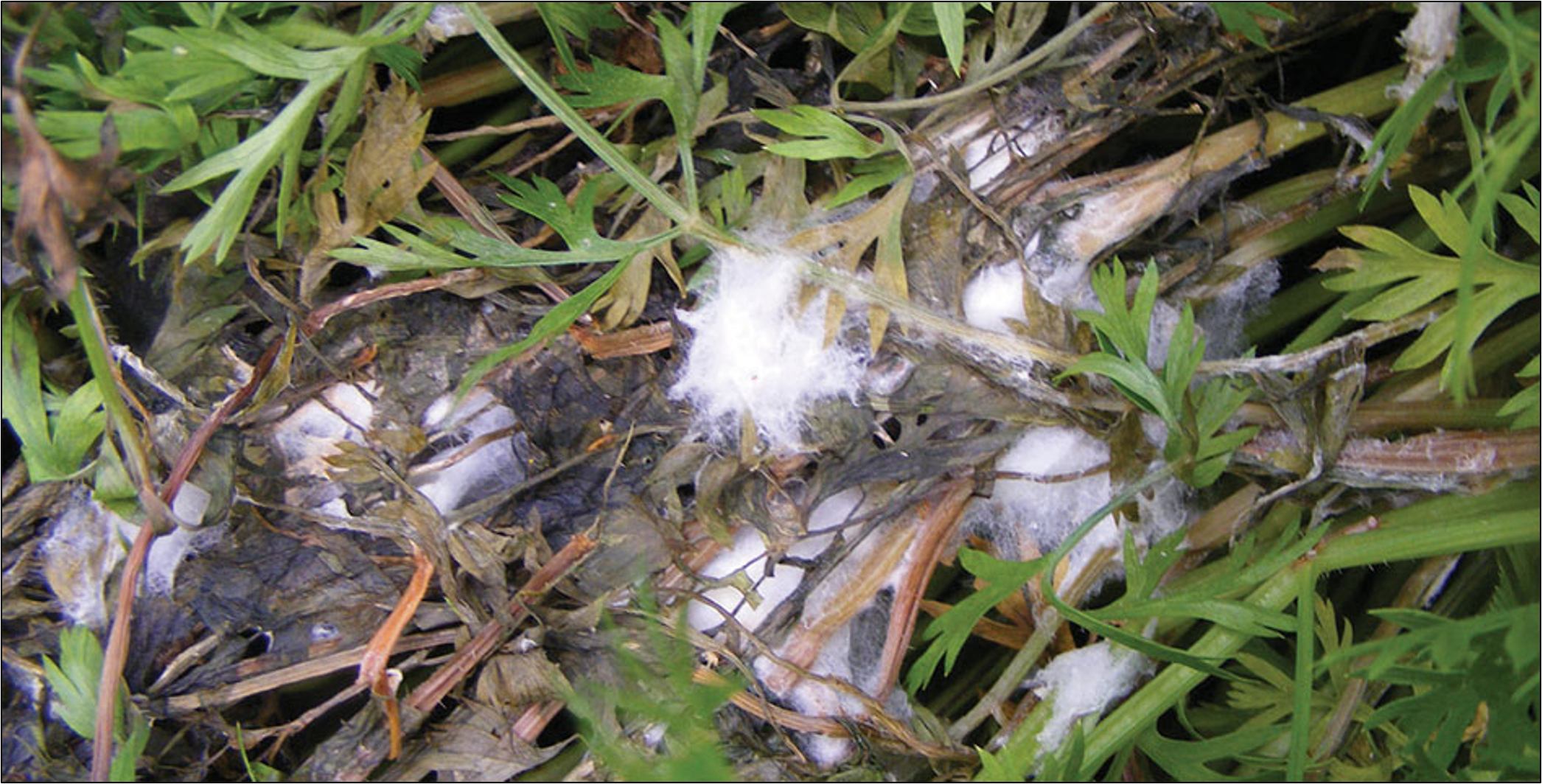
Cucurbits – Cucurbit downy mildew has been confirmed on August 27th in commercial cucumbers in Elgin County. This is the first report in Ontario for 2026. The first report is much later than previous years, similar to other regions in the northeastern US. Cucumber and cantaloupe growers should be on a downy mildew targeted fungicide program for the rest of the season.

Garlic – If you are considering purchasing new planting stock for the 2026-2027 field season, remember that low levels of stem and bulb nematodes can be found in planting stock. Testing one bulb for every 200 lbs of planting stock or one in every 1000 bulbs could be a good indication of if there are nematodes present. Along with avoiding stem and bulb nematode, here are some other things to consider before purchasing new planting stock: https://onvegetables.com/2022/08/05/garlicplanting/. Clean seed is still available for purchase from the SPUD Unit Clean Seed Program for the 2026-27 Season. Ontario growers who are members of the Garlic Growers Association of Ontario (GGAO) are now able to order clean seed (roundels) in multiples of 50 by E-mailing garlicgrowersofontario@gmail.com. Roundels take an average of 2-3 growing seasons to reach a marketable size. Field trials between 2021-2025 show an average of a 25% increase in yield if planting a similar size clove of clean seed compared to a conventionally grown clove. The full results of this trial and a summary of the benefits of clean seed can be found in this previous article published October 2025: https://onvegetables.com/2025/10/10/cleanseed/. Once planting stock is obtained, consider planting in September opposed to October. Results from the past 3 years of planting date trials indicate that the later garlic is planted, the greater the amount of risk there is to losing yields at harvest the following July. To determine if planting earlier would result in winterkill or have negative impacts on yield, a planting date trial was conducted in Dashwood from 2022 to 2025 with seven planting dates starting in August and continuing roughly every three weeks until December, along with a single planting date in March or April every spring. In all three years, earlier planting dates had better winter survival, even though they also had the most leaves emerged prior to snow cover / the ground freezing. In the first two years the earliest dates also had the highest yields but there was a slight decrease in yields if the cloves were planted as early as August 21st. The full results of this trial can also be found here: https://onvegetables.com/2026/08/18/when-is-the-best-time-to-plant-garlic/
Onions – Harvest continues. Royal MH can be applied for sprout control when 50% of the crop has lodged and there are green tops that are still present to absorb the product. Apply at least 10 days before the crop is harvested. The 2026 Muck Crops Research Station Grower Field Day is September 3rd from 8:30 AM– 4:00 PM at the Muck Crops Research Station (Ontario Crops Research Centre – Bradford). Check out cultivar evaluations and research trials at 1125 Woodchoppers Lane, King, ON.
Potatoes – Late blight has recently been reported in Michigan. With cooler nights and frequent rains, the risk of disease and specifically late blight has increased (Figure 1). Ensure later maturing crops remain protected with late blight specific fungicides. Early blight and grey mould have also been increasing in fields.
Potato leafhopper numbers have been higher than usual this past season. Monitor for signs of hopperburn. Leafhopper nymphs can sometimes be seen on the underside of potato leaves (Figure 2).


Tomatoes – Late blight symptoms have been found in a backyard garden on tomatoes in Eastern Ontario (Lanark County). No late blight has been found in commercial fields but risk remains high with recent weather.

Pest Degree Day Forecasting
| County | Carrot Rust Fly | Onion Maggot | Carrot Weevil | Aster Leafhopper | Tarnished Plant Bug | Cabbage Maggot | Seedcorn Maggot | European Corn Borer |
| THRESHOLD | 329-395, 1399-1711 | 210-700, 1025-1515 | 138-156, 455+ | 128+ | 40+ | 314-398, 847-960, 1446-1604 | 200-350, 600-750, 1000-1150 | See legend below |
| Bruce*** | 1652 | 1513 | 1121 | 884 | 578 | 1246 | 1513 | 776 |
| Essex* | 2262 | 2106 | 1656 | 1372 | 980 | 1803 | 2106 | 1236 |
| Chatham-Kent* | 2097 | 1942 | 1500 | 1228 | 864 | 1645 | 1942 | 1103 |
| Norfolk** | 1951 | 1801 | 1384 | 1126 | 768 | 1517 | 1801 | 1002 |
| Huron*** | 1808 | 1662 | 1252 | 1002 | 666 | 1384 | 1662 | 885 |
| Wellington** | 1749 | 1609 | 1217 | 973 | 642 | 1342 | 1609 | 857 |
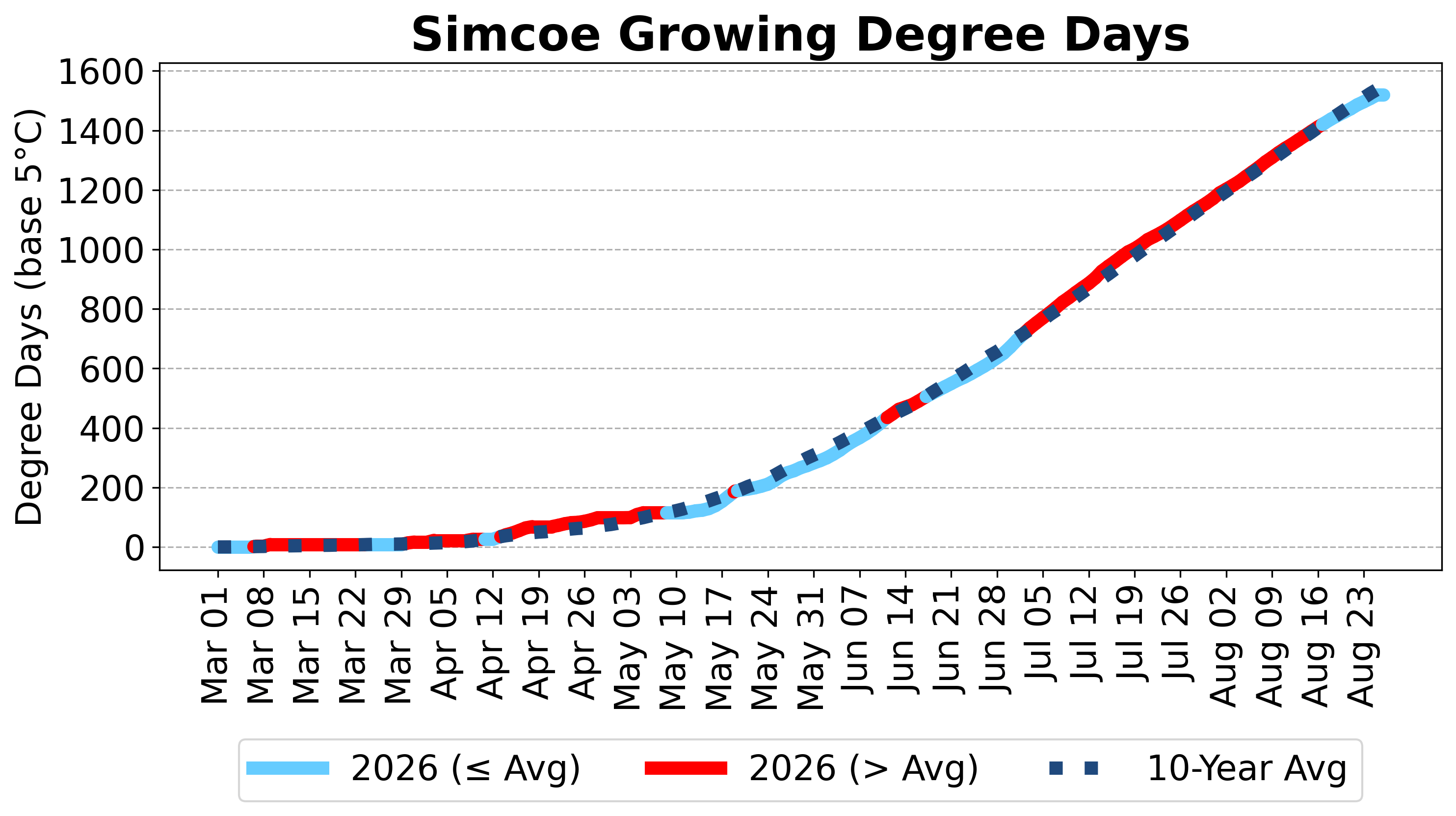
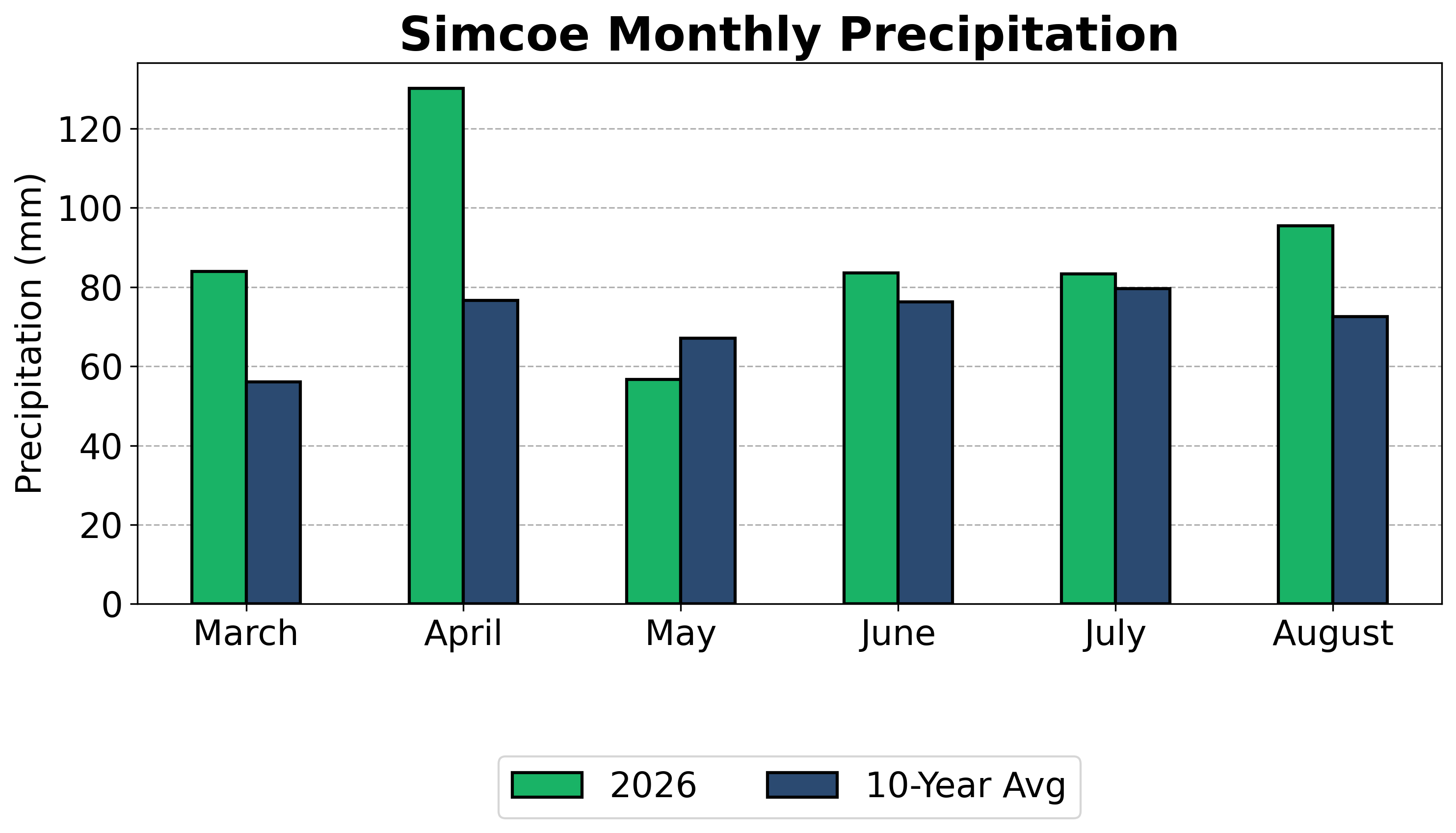
| Simcoe County*** | 1794 | 1654 | 1265 | 1022 | 695 | 1391 | 1654 | 908 |
| Durham*** | 1904 | 1761 | 1359 | 1110 | 776 | 1490 | 1761 | 995 |
| Peterborough | 1793 | 1652 | 1257 | 1013 | 677 | 1386 | 1652 | 897 |
| Kemptville*** | 1901 | 1761 | 1357 | 1111 | 778 | 1488 | 1761 | 997 |
| Sudbury*** | 1567 | 1444 | 1103 | 892 | 595 | 1214 | 1444 | 790 |
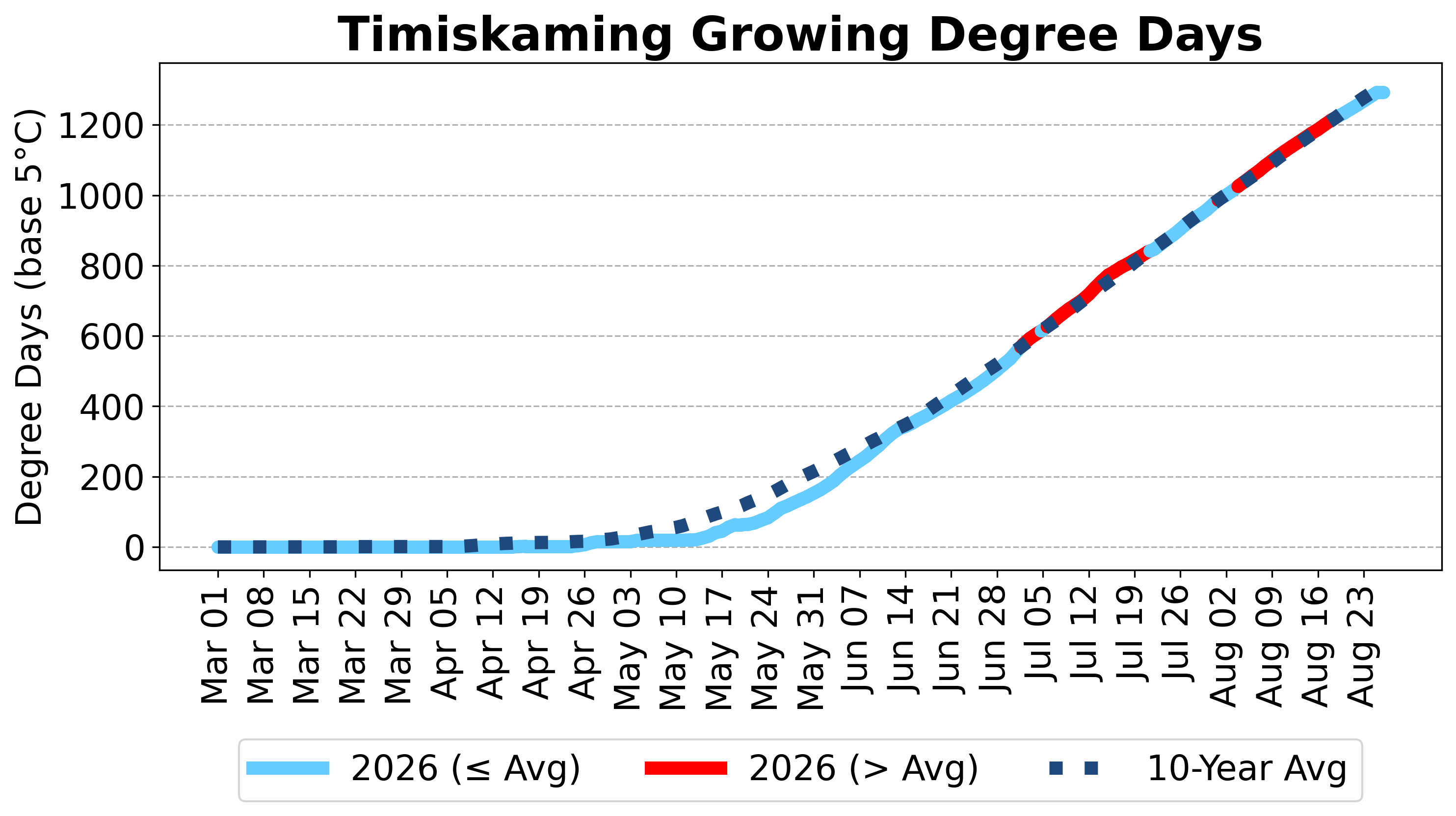
| Timiskaming*** | 1532 | 1408 | 1074 | 864 | 566 | 1181 | 1408 | 763 |
| Lambton** | 2001 | 1849 | 1424 | 1170 | 814 | 1561 | 1849 | 1048 |
| Thunder Bay | 1420 | 1299 | 970 | 772 | 493 | 1074 | 1299 | 676 |
| Middlesex* | 2012 | 1863 | 1442 | 1184 | 826 | 1579 | 1863 | 1060 |
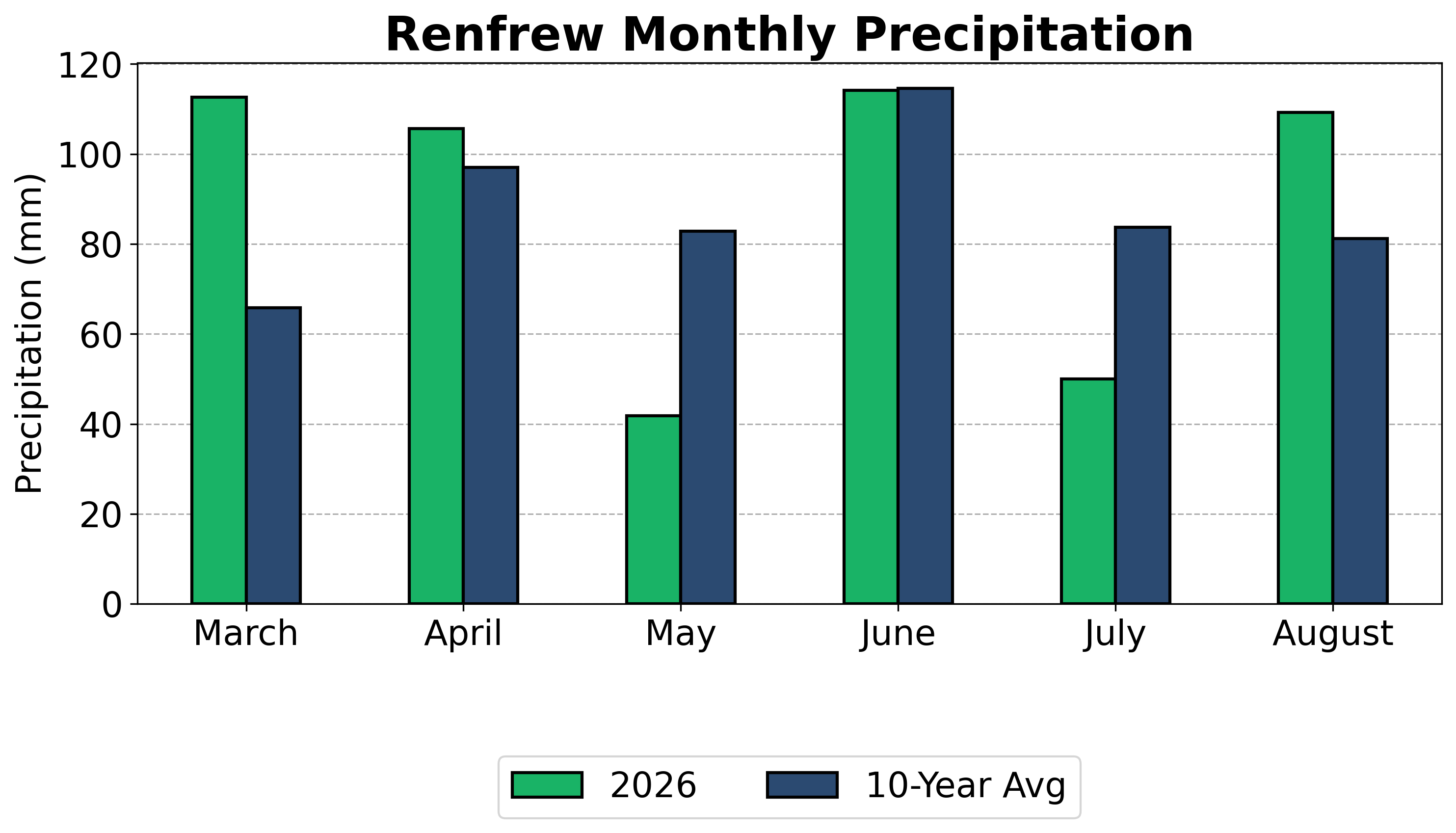
| Renfrew | 1644 | 1522 | 1174 | 966 | 687 | 1287 | 1522 | 871 |
*- Bivoltine region for ECB. First Peak Catch: 300-350 DD, Second Peak Catch 1050-1100 DD
**- Overlap region for ECB. First Peak Catch: 300-350 DD Second Peak Catch 650-700 DD, Third Peak Catch 1050-1100 DD
***-Univoltine region for ECB. Peak Catch 650-700 DD
Use these thresholds as a guide, always confirm insect activity with actual field scouting and trap counts
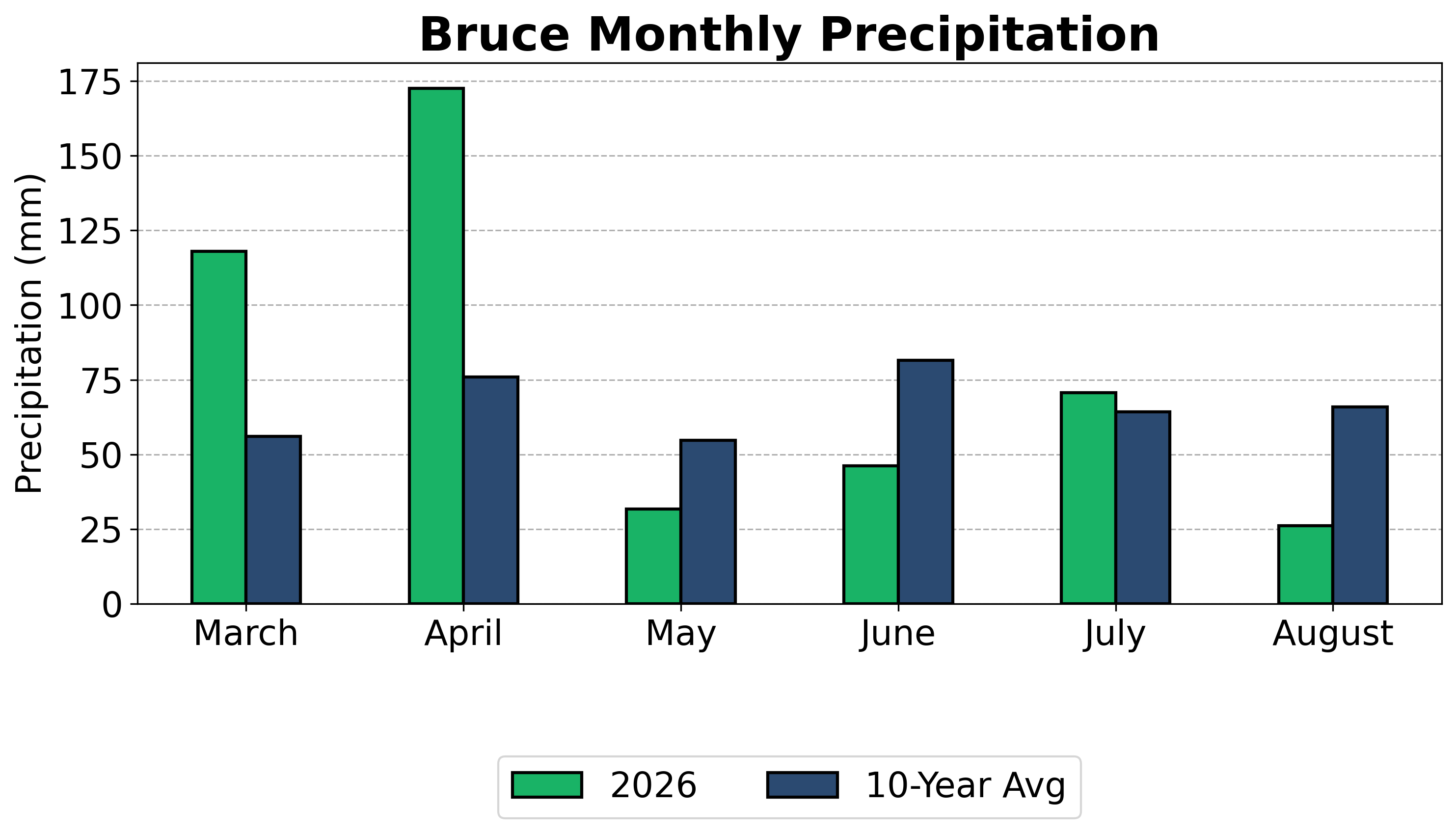
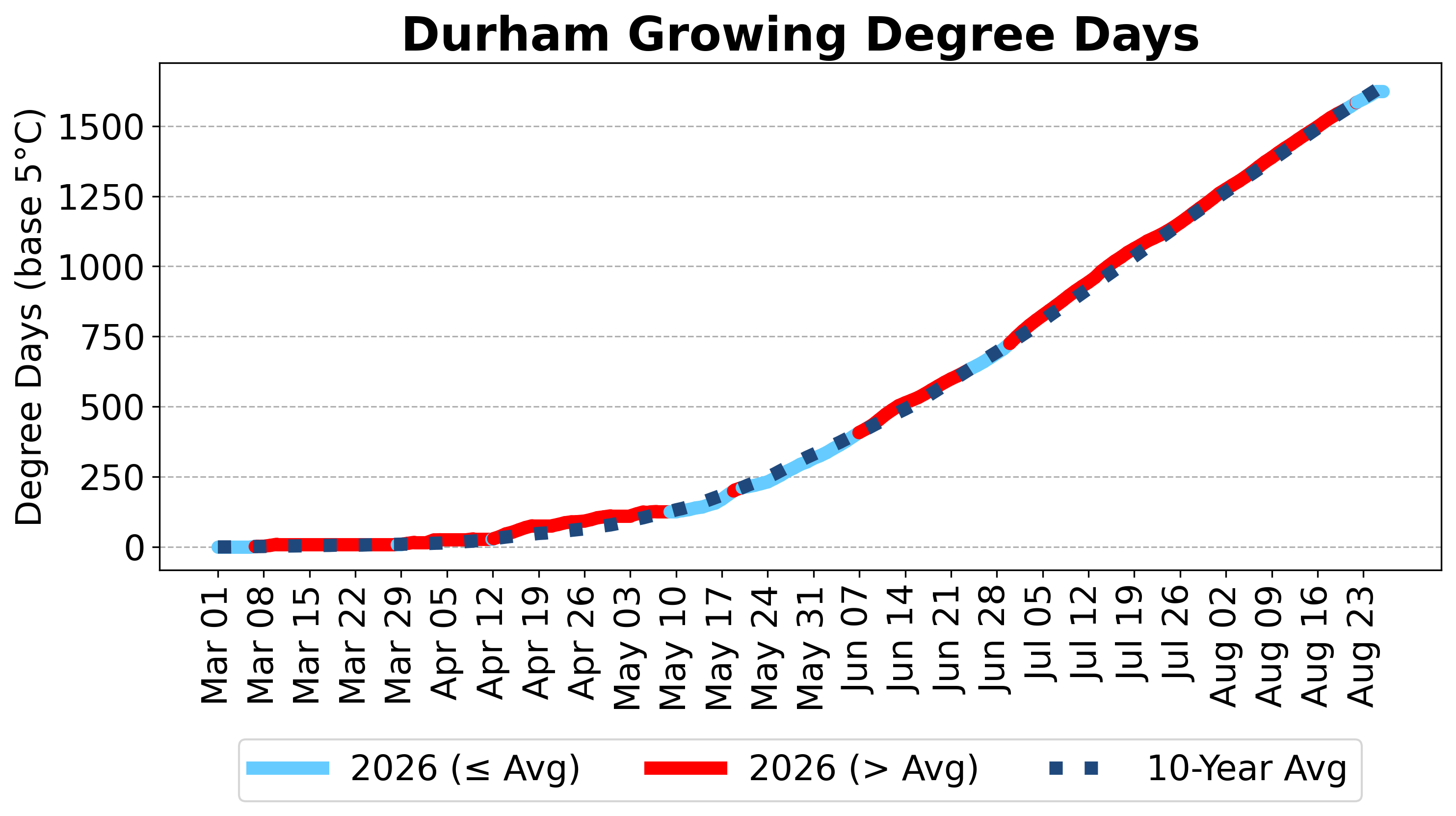
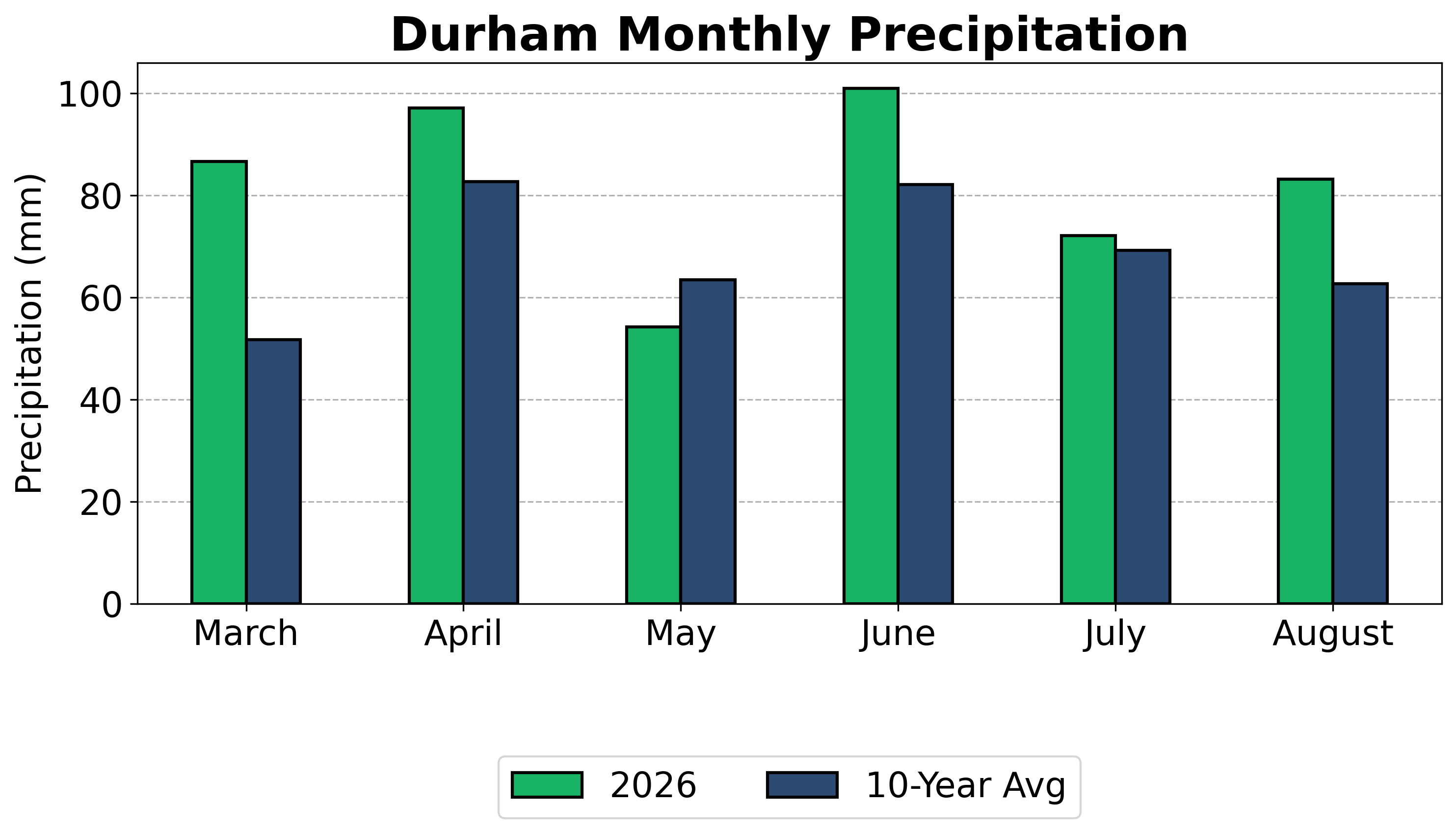
Select a region below for the latest weather, crop and pest degree day information:
Bruce

Chatham-Kent


Durham
Essex


Huron

Kemptville


Lambton


Middlesex
Norfolk

Peterborough


Renfrew

Simcoe
Sudbury


Thunder Bay


Timiskaming
Wellington Centre


Wellington North


0 comments on “VCR – Vegetable Crop Report – August 27th”